
 Pin it
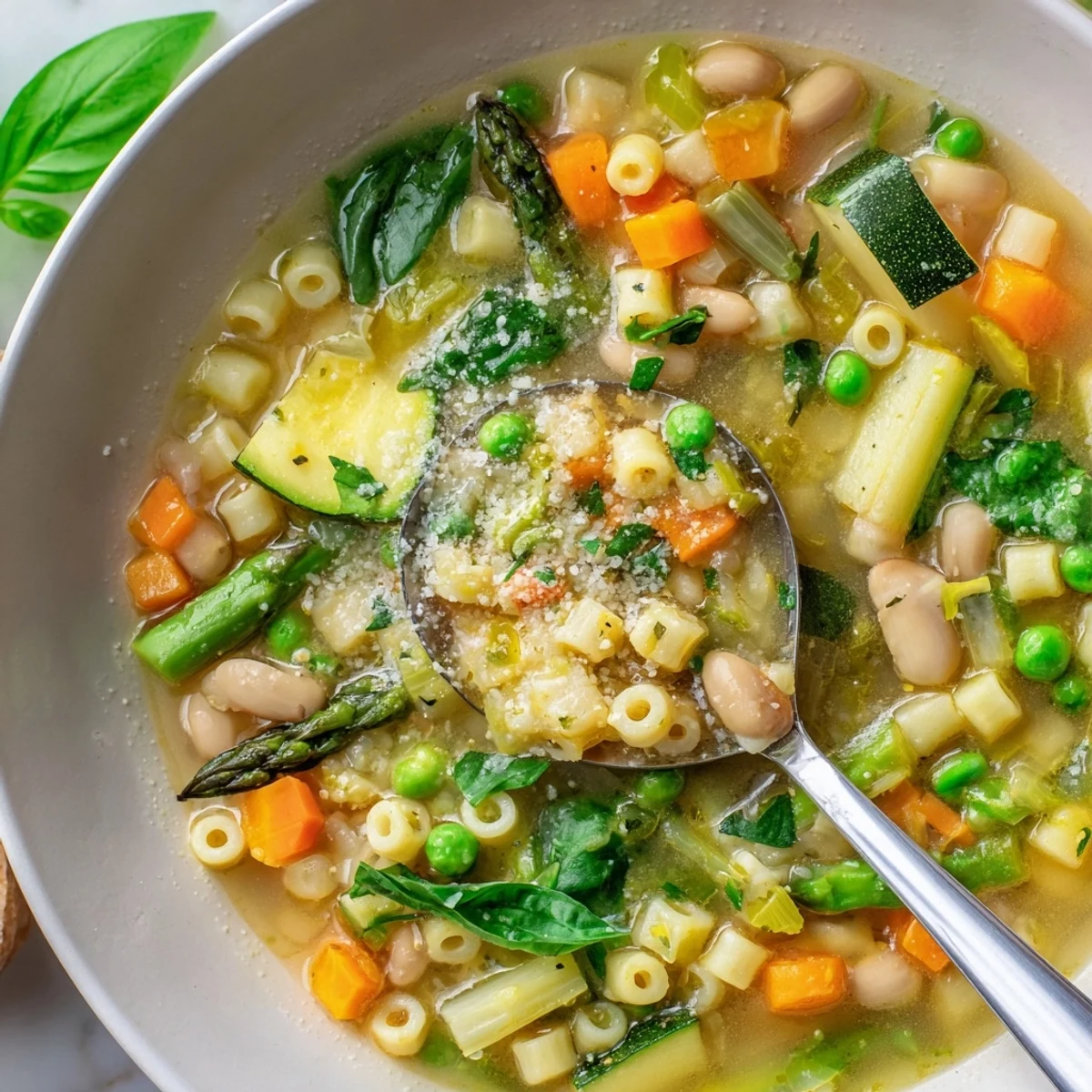
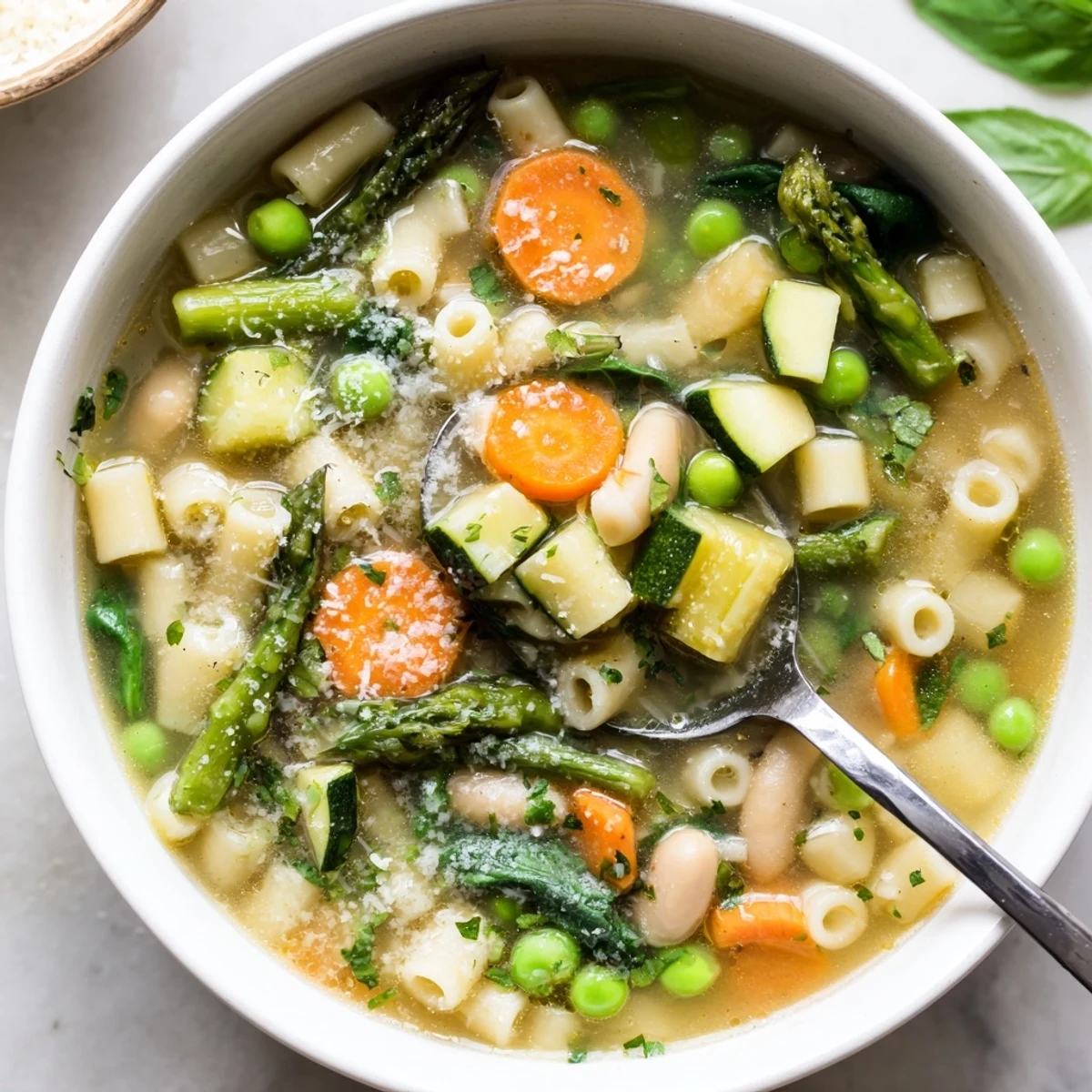
 This bright minestrone brings together the best of spring produce in one comforting bowl. Asparagus, zucchini, and sweet peas simmer with cannellini beans and small pasta in a fragrant vegetable broth. Fresh basil, parsley, and a splash of lemon juice lift every spoonful, while optional Parmigiano adds a savory finish. Ready in under an hour, it's an effortless way to celebrate seasonal flavors.
There was a stretch one April where my farmers market haul kept getting away from me and I'd end up staring at a motley pile of asparagus, zucchini, and peas with no plan. This soup started as a desperate clean-out move and turned into the dish I now look forward to all winter long just so I can finally make it again.
I brought a big pot of this to a friend's porch dinner last spring and her usually picky seven year old went back for thirds. The kids were playing tag in the yard and the soup just sat there getting better while we talked, and by the time everyone came back to the table it had thickened up into something almost stew like and magical.
Ingredients
- Olive oil: A good extra virgin here matters since it is the only fat and you can really taste it in the finished broth
- Onion and garlic: Finely chopped so they melt into the base rather than leaving chunky bits behind
- Carrots: Diced small so they cook at the same rate as the softer spring vegetables
- Asparagus: Cut into one inch pieces and use the tender parts only, the woody ends will make the soup fibrous
- Zucchini: Diced to match the carrots for even cooking and a pleasant texture contrast
- Peas: Fresh ones are worth seeking out but frozen work perfectly fine in a pinch
- Baby spinach: Added at the very end so it keeps its bright color and delicate texture
- Vegetable broth: Use a low sodium one so you can control the seasoning yourself
- Cannellini beans: Drained and rinsed well to keep the broth clean and clear
- Small pasta: Ditalini or orzo both work, just avoid anything too large or it will overwhelm the vegetables
- Salt and pepper: Start with a teaspoon of salt and adjust at the end since the broth and beans both contribute sodium
- Fresh basil and parsley: Do not skip the fresh herbs here, dried will not give you that lively spring flavor
- Lemon juice: Added off the heat to preserve its brightness, this is what makes the whole bowl sing
- Parmigiano Reggiano: Optional but a generous grating on top turns a simple soup into something you would pay for at a restaurant
Instructions
- Build the aromatic base:
- Heat the olive oil in a large pot over medium heat and add the chopped onion, letting it soften for about three minutes until it turns translucent and smells sweet.
- Add the garlic and carrots:
- Stir in the minced garlic and diced carrots, cooking for two to three minutes until you can smell the garlic and the carrots just start to soften at the edges.
- Toss in the spring vegetables:
- Add the asparagus, zucchini, and peas, stirring occasionally for two minutes so everything gets coated in that fragrant oil.
- Simmer with broth and beans:
- Pour in the vegetable broth and bring it to a boil, then add the cannellini beans and pasta, reduce the heat, cover, and let it simmer for eight to ten minutes until the pasta and vegetables are tender.
- Wilt the greens and herbs:
- Stir in the baby spinach, chopped basil, and parsley, cooking just one to two minutes until the spinach collapses into bright green ribbons.
- Finish with lemon and seasoning:
- Remove the pot from heat, stir in the lemon juice, and taste before adding more salt and pepper as needed.
- Serve with love:
- Ladle into warm bowls and finish with a generous shower of grated Parmigiano Reggiano if you are using it.
 Pin it
 My mother in law once told me this soup reminded her of something her grandmother made in their kitchen outside Naples, with whatever was growing in the garden that week. I cannot verify the authenticity but the way she closed her eyes on the first spoonful told me everything I needed to know.
Choosing Your Vegetables
The beauty of minestrone is its flexibility, but in spring I have learned to let the season dictate what goes in the pot. Fava beans are incredible if you have the patience to shell them, and leeks swapped in for the onion add a sweeter, more delicate backbone.
The Broth Matters More Than You Think
I used to grab whatever vegetable broth was on sale and wonder why my soups tasted generic. Switching to a quality low sodium broth, or even better a homemade one you have frozen in batches, makes a difference you can immediately taste in every spoonful.
Serving It Right
A thick slice of crusty bread for dunking is nonnegotiable in my house, and a cold glass of Pinot Grigio alongside turns a weeknight dinner into something that feels like a small celebration.
- Warm your bowls in a low oven for five minutes before ladling, it keeps the soup hot longer at the table
- Set out extra lemon wedges so everyone can adjust the brightness to their liking
- If you have vegans at the table, keep the cheese on the side and offer a drizzle of good olive oil instead
 Pin it
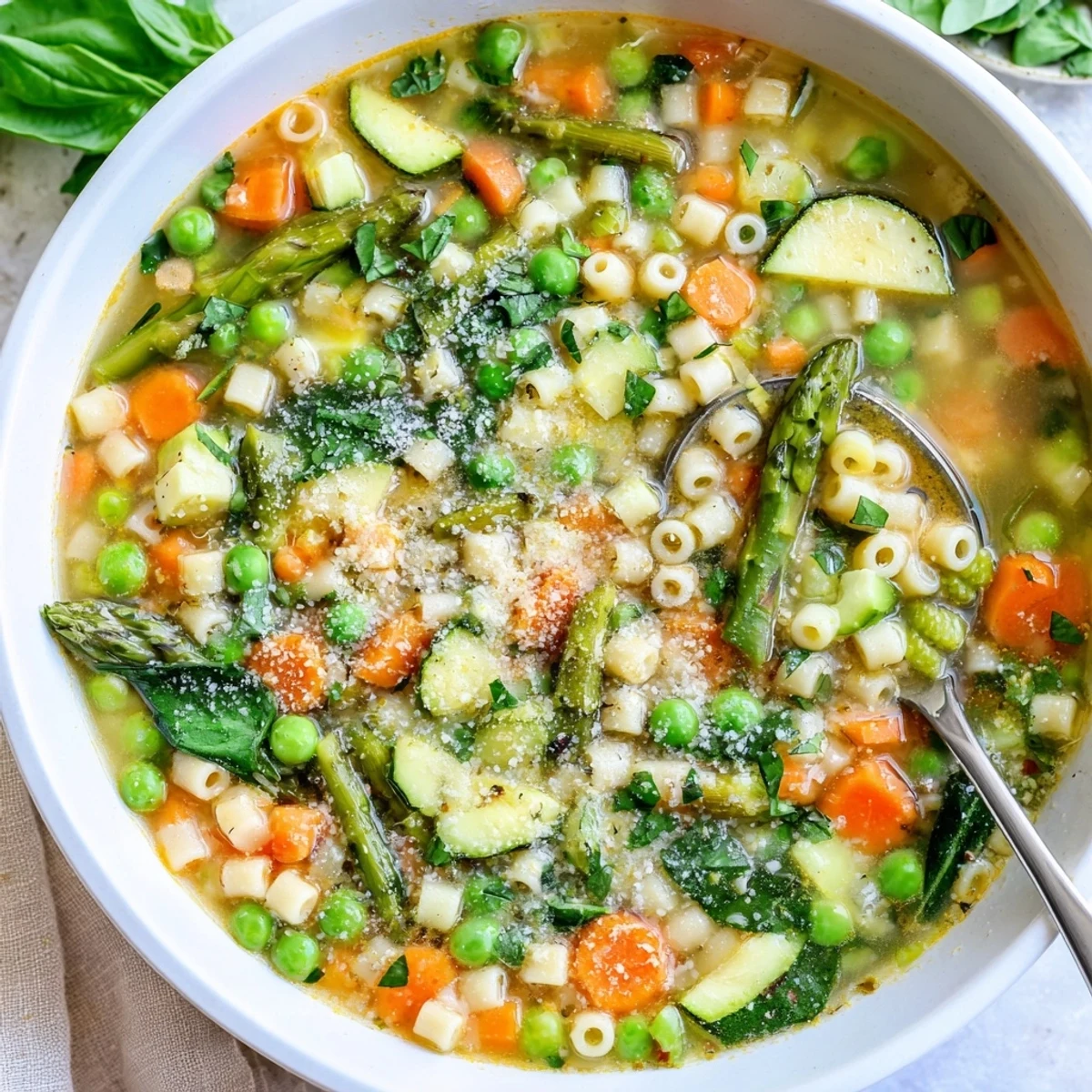
 This is the soup that makes me believe spring is actually here and not just a calendar date. Every bowl feels like a fresh start.
Recipe FAQs
- → What vegetables work best in spring minestrone?
-
Asparagus, zucchini, peas, and carrots are classic choices. You can also add fava beans, green beans, or leeks depending on what's fresh and available.
- → Can I make this minestrone vegan?
-
Yes—simply skip the Parmigiano Reggiano garnish or replace it with a plant-based cheese alternative. The soup itself is entirely vegetable-based.
- → What type of pasta should I use?
-
Small shapes like ditalini or orzo work best because they cook quickly and fit neatly on a spoon. Any short pasta will do in a pinch.
- → How long does this soup keep in the fridge?
-
Store leftovers in an airtight container for up to 3 days. The pasta may absorb some broth, so add a splash of vegetable broth when reheating.
- → Can I freeze spring minestrone?
-
You can freeze it for up to 2 months, though the pasta texture may soften slightly. For best results, cook the pasta separately and add it when reheating.
- → What should I serve with minestrone?
-
Crusty bread is a natural pairing. A light white wine like Pinot Grigio complements the fresh, herbaceous flavors beautifully.