
 Pin it
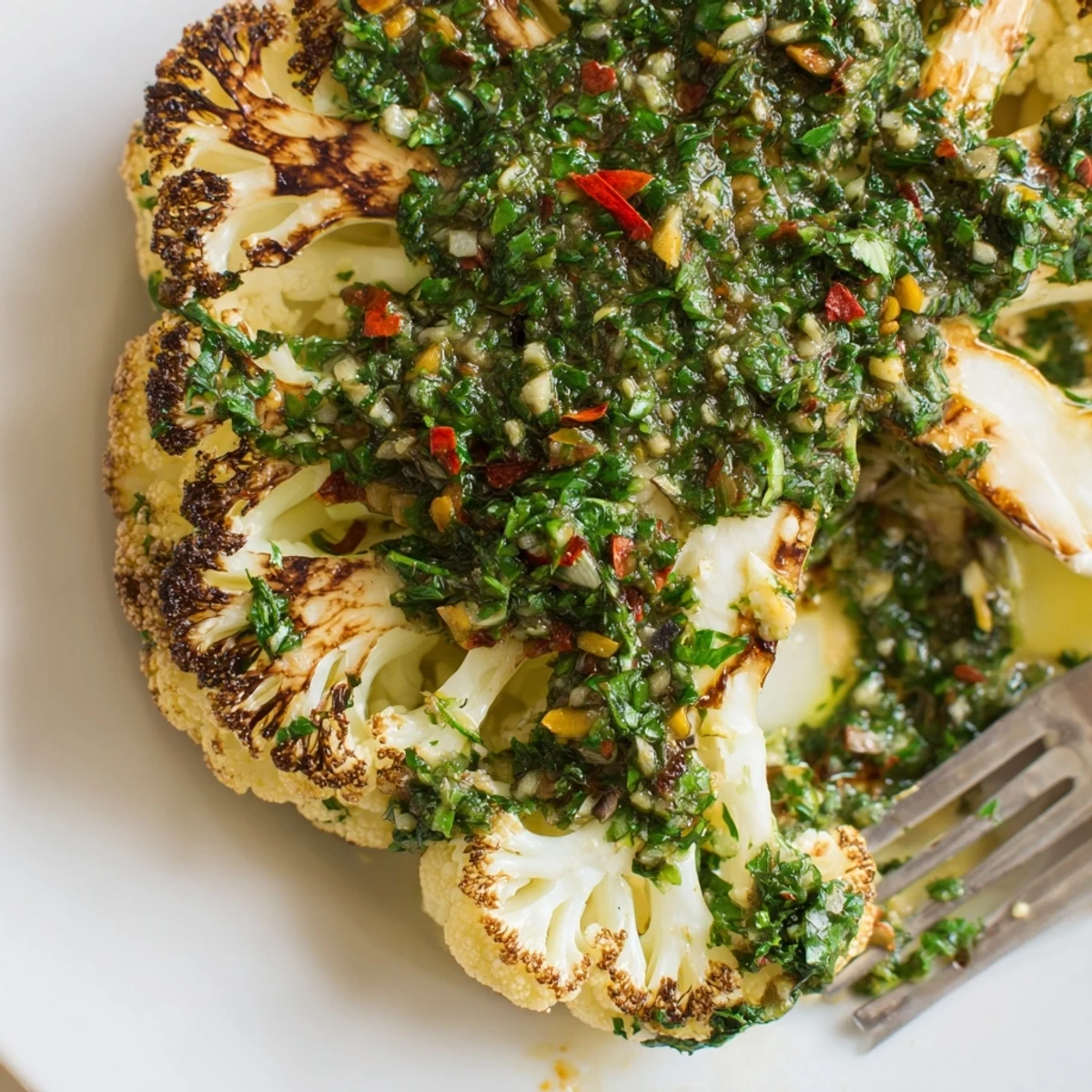
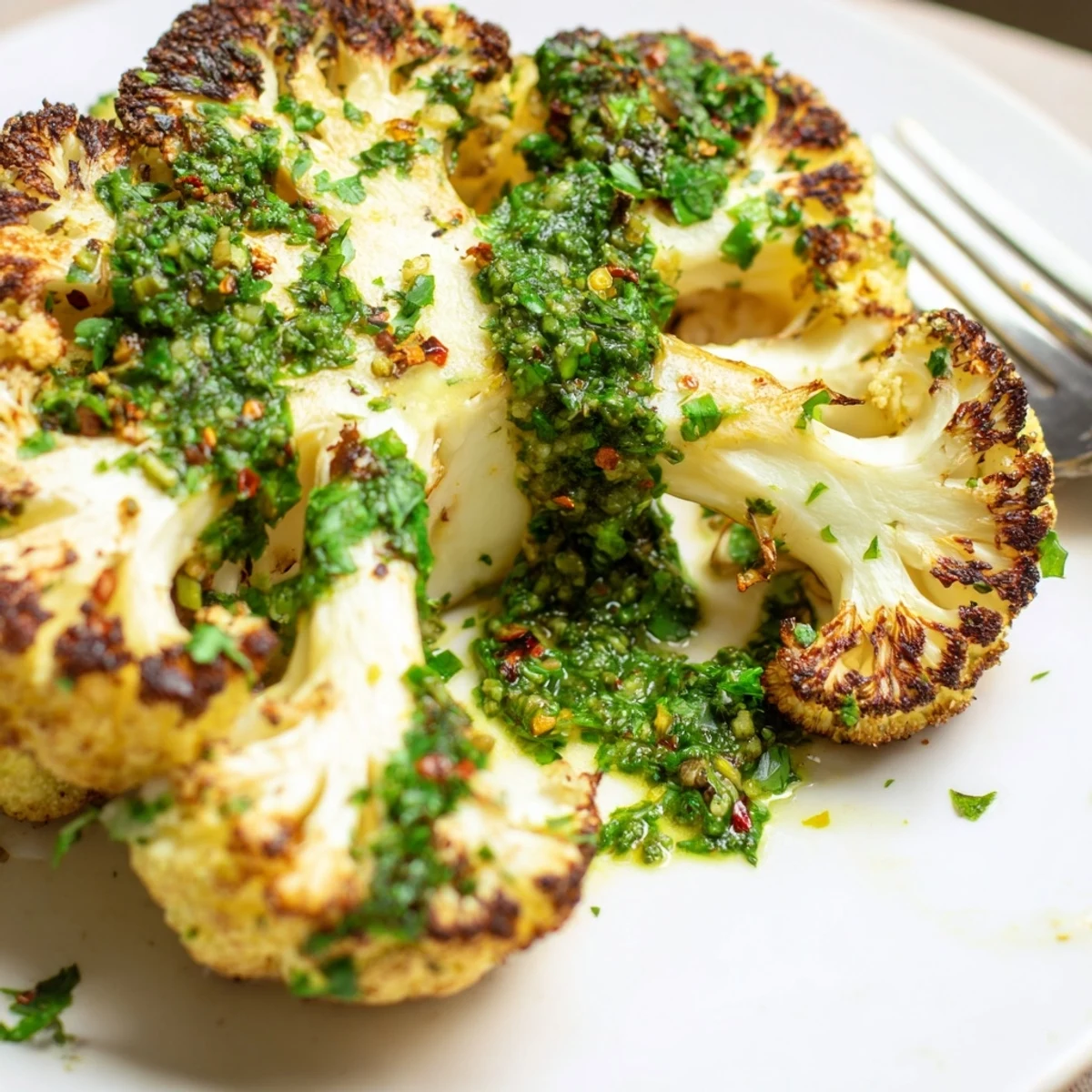
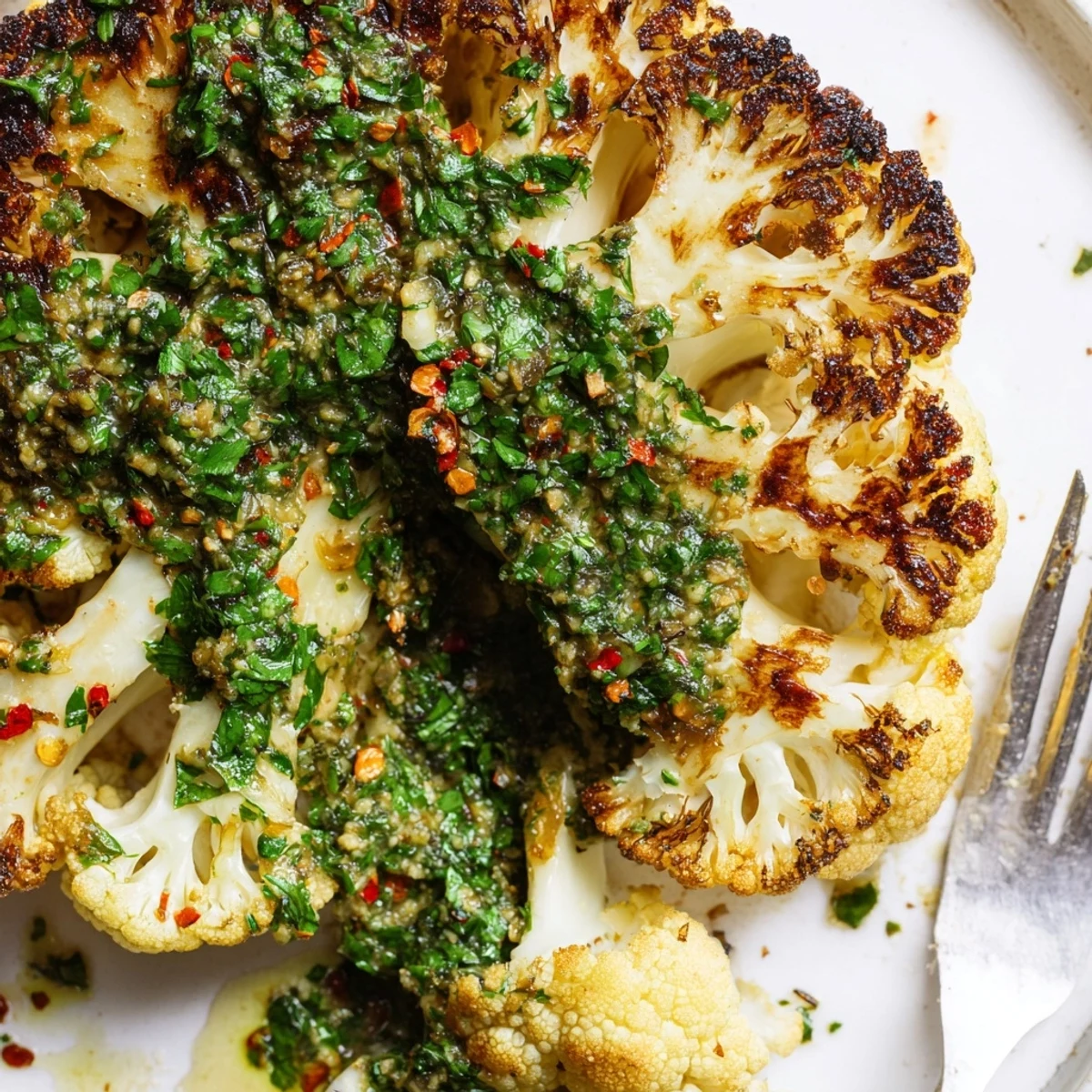
 Prepare thick cauliflower steaks seasoned with smoked paprika, garlic powder, salt, and pepper, then roast until golden and tender. Meanwhile, mix fresh parsley, cilantro, garlic, oregano, olive oil, red wine vinegar, and spices to create a bright chimichurri sauce. Serve the cauliflower topped generously with the herbaceous sauce. This dish offers a vibrant, plant-based option perfect as a main or side, combining smoky roasted flavors with zesty, fresh herbs.
I discovered cauliflower steaks by accident one autumn when a farmers market vendor handed me two enormous heads of cauliflower instead of the one I'd asked for. Rather than waste them, I decided to slice them thick and roast them whole, and something magical happened—the edges turned golden and crispy while the inside stayed tender and sweet. That first plate with a drizzle of chimichurri changed how I thought about vegetables forever.
I made this for friends who'd just gone plant-based, and I remember the quiet moment when someone took that first bite and just stopped talking. The cauliflower had this unexpected richness, and the herbs in the chimichurri hit with this brightness that made everyone lean back and smile. That's when I knew this wasn't just a vegetable recipe—it was something people actually wanted to eat.
Ingredients
- Large heads of cauliflower (2): Look for heads that are dense and creamy white with tight florets; they'll slice cleaner and roast more evenly than looser ones.
- Olive oil (3 tbsp for steaks, ½ cup for sauce): Use a good extra-virgin for the chimichurri—it's where the olive oil actually shines and makes a difference you can taste.
- Smoked paprika (1 tsp): This is the secret that makes the roasted edges taste like they have depth; regular paprika feels flat by comparison.
- Garlic powder (1 tsp) and sea salt (1 tsp): Toast them together in your mind before they hit the cauliflower—they're going to caramelize and deepen in flavor.
- Ground black pepper (½ tsp): Fresh cracked is better, but what matters is using enough to actually taste it.
- Fresh flat-leaf parsley (1 cup, finely chopped): Don't use the dried stuff here; parsley is where chimichurri gets its soul.
- Fresh cilantro (¼ cup, finely chopped): If cilantro tastes like soap to you, double the parsley instead and nobody will judge.
- Fresh garlic (3 cloves, minced): Mince it small so it distributes evenly and doesn't give harsh bites in certain spoonfuls.
- Fresh oregano (2 tbsp, finely chopped): This is where you'll taste the South American warmth; if you only have dried, use 1 tbsp and it still works.
- Red wine vinegar (2 tbsp): The acidity wakes up the sauce and keeps it from feeling oily no matter how much olive oil you use.
- Crushed red pepper flakes (½ tsp, optional): Add these if you want heat that lingers pleasantly, or skip them if you're cooking for people who prefer mild.
Instructions
- Heat your oven and prepare your stage:
- Preheat to 425°F and line a baking sheet with parchment paper so cleanup becomes almost an afterthought. Everything feels easier when your oven is ready and waiting.
- Transform the cauliflower into steaks:
- Remove the outer leaves and trim the stem, but keep the core intact—that's what holds everything together. Place each head stem-side down on a cutting board and use a large, sharp knife to slice straight down into 1-inch thick steaks, working slowly and letting the weight of the blade do the work; you'll get 2-3 good steaks per head and some loose florets that you can save for roasting another day or adding to a grain bowl.
- Season generously and get them in the oven:
- Brush both sides of each steak with olive oil—don't be shy, it's what makes the edges crispy and golden. Sprinkle the smoked paprika, garlic powder, black pepper, and sea salt on both sides, then arrange the steaks on your prepared baking sheet in a single layer.
- Roast until they turn golden:
- Pop them in the oven for 20 minutes, then carefully flip each one and roast for another 12-15 minutes until the edges are caramelized and the center is fork-tender. You'll know they're done when they smell nutty and rich, not just like roasted vegetables.
- Build the chimichurri while you wait:
- Combine the finely chopped parsley, cilantro, minced garlic, oregano, extra-virgin olive oil, red wine vinegar, red pepper flakes, salt, and black pepper in a bowl. Stir it all together and let it sit for at least 10 minutes so the flavors can meld and the garlic softens just slightly, making the sauce taste harmonious instead of raw.
- Plate and serve:
- Arrange the golden roasted steaks on plates and spoon the vibrant green chimichurri generously over each one. Serve immediately while everything is warm and the contrast between hot cauliflower and cool, fresh sauce feels like a small revelation.
 Pin it
 My favorite moment happened when my niece, who'd been skeptical about eating more vegetables, asked for seconds and then thirds. She wanted to know if she could learn how to make the chimichurri herself because it tasted like eating fresh air that somehow had flavor. That's when I realized this dish bridges something important—it's not trying to be meat, it's just genuinely delicious on its own terms.
Why This Works as a Main Dish
Cauliflower steaks have a meaty texture that satisfies in a way thin-sliced roasted vegetables don't. The thickness means you get that contrast between caramelized exterior and tender interior, which makes your brain register it as substantial. Pair it with quinoa, couscous, or even just some crusty bread to soak up the chimichurri, and you've got a meal that feels complete and intentional, not like you're making do.
Chimichurri as the Star
The sauce is where all the personality lives in this dish. It's bright, herbaceous, and gets better the longer it sits because the garlic mellows and all those fresh flavors find their rhythm together. If you make extra—and you should—it keeps beautifully in the fridge and transforms grilled vegetables, roasted potatoes, eggs, or even sandwiches into something that feels special and intentional.
Variations That Keep Things Interesting
Once you understand how this works, you can play with it endlessly. Try different seasonings on the cauliflower like za'atar or curry powder, or add a squeeze of lemon juice to the chimichurri right before serving for extra brightness. You could also make a cilantro-heavy version if you love that flavor, or bulk up the recipe by roasting thick slices of sweet potato or eggplant alongside the cauliflower steaks and serving them all with the same sauce.
- A drizzle of hot sauce stirred into the chimichurri adds complexity and makes it your own.
- Toasted pine nuts or pumpkin seeds scattered on top add texture and make it feel fancier than it is.
- Leftover roasted cauliflower steaks make incredible next-day breakfast bowls topped with a fried egg and more chimichurri.
 Pin it
 This recipe has become the one I turn to when I want to cook something that feels fancy but takes less than an hour from fridge to table. It's proof that vegetables don't need to apologize or try to be something else—they just need respect, good seasoning, and a bright sauce to celebrate what they already are.
Recipe FAQs
- → How thick should cauliflower steaks be sliced?
-
Slice cauliflower into 1-inch thick steaks to ensure they cook evenly and hold together during roasting.
- → Can I use dried herbs for the chimichurri sauce?
-
Yes, dried oregano can be used if fresh isn't available, but fresh parsley and cilantro provide the best flavor.
- → What is the best way to roast cauliflower for tenderness?
-
Roast at 425°F (220°C) for about 35 minutes, flipping halfway, until the steaks are golden and tender.
- → How long can the chimichurri sauce be stored?
-
Keep chimichurri in the refrigerator for up to four days, allowing flavors to deepen over time.
- → What can be served alongside the cauliflower steaks?
-
Pair with quinoa, couscous, or grilled proteins to complement the smoky and herbaceous flavors.