
 Pin it
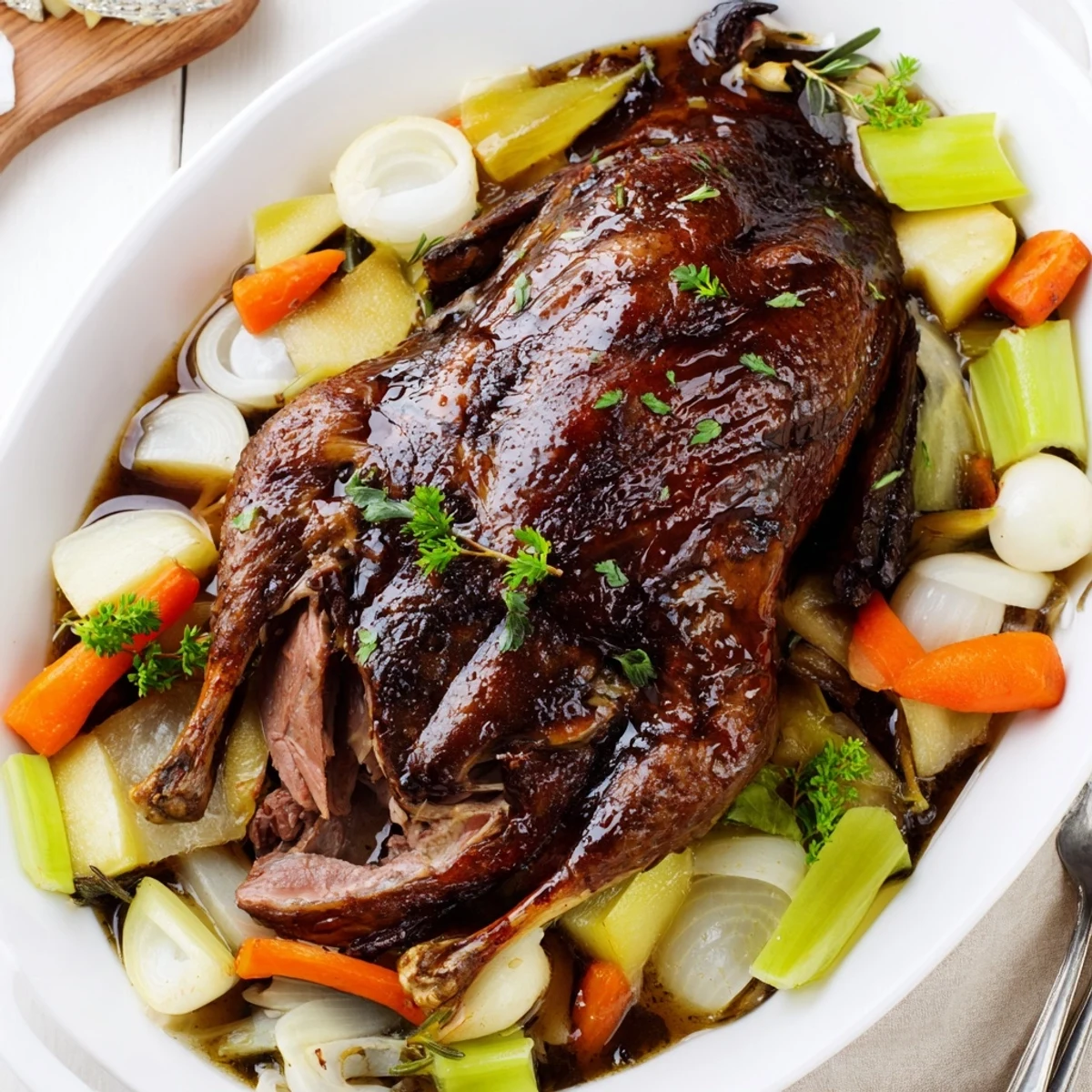
 Start by patting the bird dry and seasoning well, then sear in a heavy pot until the skin is golden to render excess fat. Remove the duck, sauté carrots, parsnips, leeks, onion and garlic, deglaze with white wine, nestle the bird back on top, add stock and herbs, cover and braise low and slow. Finish uncovered at high heat to crisp the skin, rest briefly, carve and serve with the braised vegetables and pan juices.
The sound of duck fat sizzling in a heavy pot is something between a whisper and a shout, and once you hear it, you will chase it forever. My neighbor Monsieur Renaud, who kept a vegetable garden that would make a chef weep, once handed me a whole duck over the fence with nothing more than a nod and a muttered suggestion about white wine. That evening turned into three hours of pure kitchen alchemy, and I have been braising duck every late autumn since. The crispy skin gives way to meat so tender it barely needs a knife.
I made this for a dinner party where the power went out halfway through braising, and we ate by candlelight with the duck still warm from the oven. Nobody noticed the darkness. The vegetables had absorbed so much flavor that even my friend who claims to hate parsnips went back for thirds.
Ingredients
- Whole duck (about 4 to 5 lbs): Look for a plump bird with clean skin and trim excess fat yourself to control the richness.
- Kosher salt and black pepper: Season generously and do not forget inside the cavity where it matters most.
- Carrots and parsnips: These root vegetables turn silky and sweet during braising, acting as both flavor builders and side dish.
- Leeks, onion, celery, and garlic: The aromatic backbone that fills your kitchen with an aroma impossible to ignore.
- Olive oil: Just enough to get the sear started before the duck releases its own glorious fat.
- Dry white wine: A Chenin Blanc from the Loire Valley is ideal but any dry white will deglaze beautifully and add subtle acidity.
- Chicken stock: Low sodium gives you control over the final salt level in the braising liquid.
- Fresh thyme, rosemary, and bay leaf: Fresh herbs make a noticeable difference here so skip the dried if you can.
- Fresh parsley (optional): A bright finishing touch that cuts through the richness on the plate.
Instructions
- Preheat and prep:
- Set your oven to 350 degrees Fahrenheit and let it come fully to temperature while you prepare the duck.
- Season the bird:
- Pat the duck very dry with paper towels then season inside and out with salt and pepper, taking your time to reach every surface.
- Build the crust:
- Heat olive oil in a large Dutch oven over medium high heat and sear the duck breast side down for 5 to 7 minutes until the skin turns a deep burnished gold, then flip and brown the other side.
- Sauté the vegetables:
- Pour off all but two tablespoons of rendered fat and add all the vegetables, cooking until they take on color and begin to soften.
- Deglaze with wine:
- Pour in the white wine and scrape up every last brown bit stuck to the pot because that is where the deepest flavor lives.
- Braise low and slow:
- Nestle the duck on top of the vegetables, add stock and herbs, cover tightly, and slide it into the oven for 90 minutes, basting the bird halfway through.
- Crisp the finish:
- Remove the lid, crank the heat to 425 degrees Fahrenheit, and roast uncovered for 20 minutes until the skin crackles under gentle pressure.
- Rest and serve:
- Let the duck rest for 10 minutes before carving, then serve over the braised vegetables with cooking juices ladled generously on top.
 Pin it
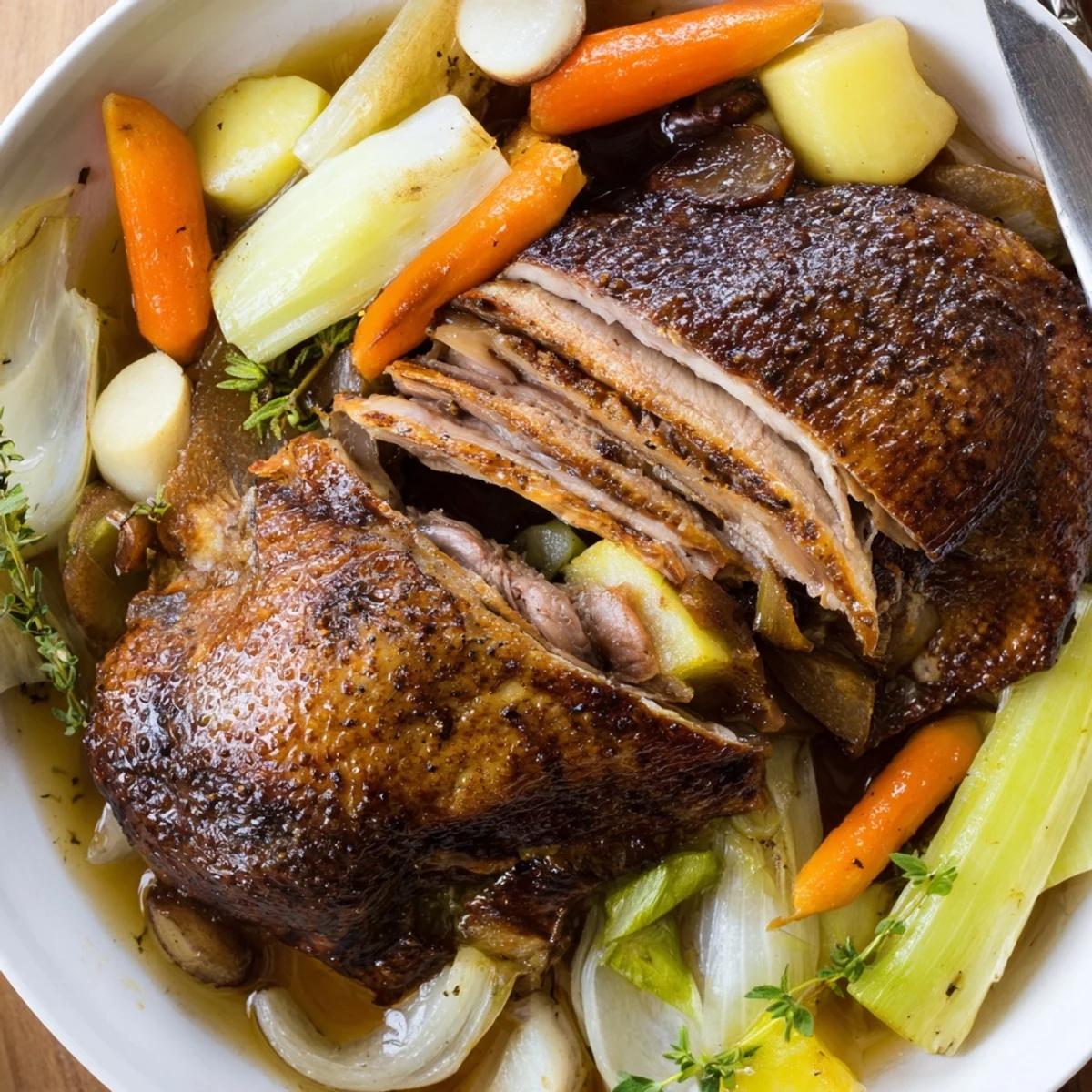
 There is a particular kind of silence that falls over a table when everyone takes their first bite of really good duck. It happened at that candlelit dinner and it has happened every time since.
Perfecting the Crispy Skin
Getting the skin right is the difference between a good duck and an unforgettable one. Parboiling the whole duck for three minutes before roasting tightens the skin and renders a thin layer of fat that makes the final blast of high heat far more effective. After parboiling, pat the bird completely dry and let it sit uncovered in the refrigerator for a few hours if you have the time.
Vegetable Variations Worth Trying
The vegetable bed is endlessly adaptable once you understand the basic logic of firm roots that can withstand long braising. Turnips, potatoes, and even chunks of butternut squash work beautifully in place of or alongside the parsnips and carrots. Avoid softer vegetables like zucchini because they will dissolve into mush during the long cook.
What to Serve Alongside
This dish is rich enough to stand almost on its own, but a simple bitter greens salad dressed with lemon and olive oil provides exactly the contrast it needs. A loaf of crusty bread for soaking up the braising juices is nonnegotiable in my house. The right wine turns dinner into an occasion.
- Loire Valley Chenin Blanc has the acidity and body to match the richness of duck.
- Light Pinot Noir works if you prefer red and its fruitiness complements the root vegetables.
- Always let the braising liquid settle before serving so the fat rises and you can spoon off what you do not want.
 Pin it
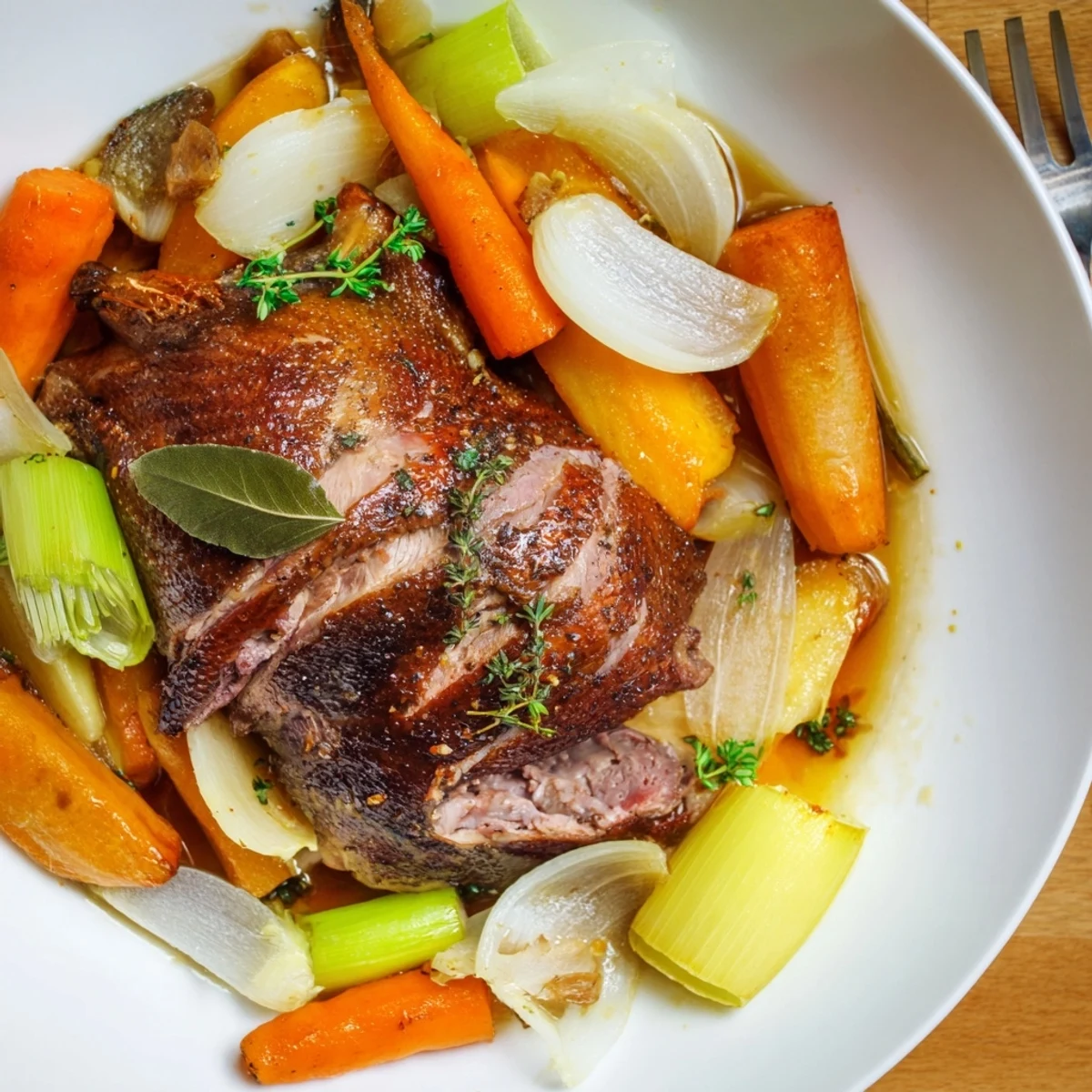
 Cooking a whole duck feels like an event, and sharing it with people you love makes it feel like a celebration. This recipe turns an ordinary evening into something worth remembering.
Recipe FAQs
- → How do I get extra-crispy skin?
-
Pat the duck very dry and salt it well; sear skin-side down to render fat, remove excess fat before braising, then finish at a high oven temperature uncovered to crisp the skin.
- → Can I swap the vegetables?
-
Yes—turnips, potatoes, or other root vegetables work well. Choose sturdy vegetables that hold up to braising and cut them into uniform chunks for even cooking.
- → How can I tell when the duck is done?
-
Braise until the meat is tender and easily gives where the leg meets the body; an internal temperature near 165°F in the thickest part is a good guideline before the final crisping step.
- → Should I remove rendered fat during cooking?
-
Pour off excess rendered fat until about 2 tablespoons remain so vegetables sauté properly; some fat helps flavor the braise, but too much will make the dish greasy.
- → What wines pair best with this dish?
-
Light red wines like Pinot Noir or a dry white such as Loire Valley Chenin Blanc complement the rich meat and herbaceous braise without overpowering it.
- → Is parboiling the duck necessary?
-
Parboiling for a few minutes can tighten the skin and reduce cooking time for crisping, but proper drying, searing and the high-heat finish achieve excellent results without it.