
 Pin it
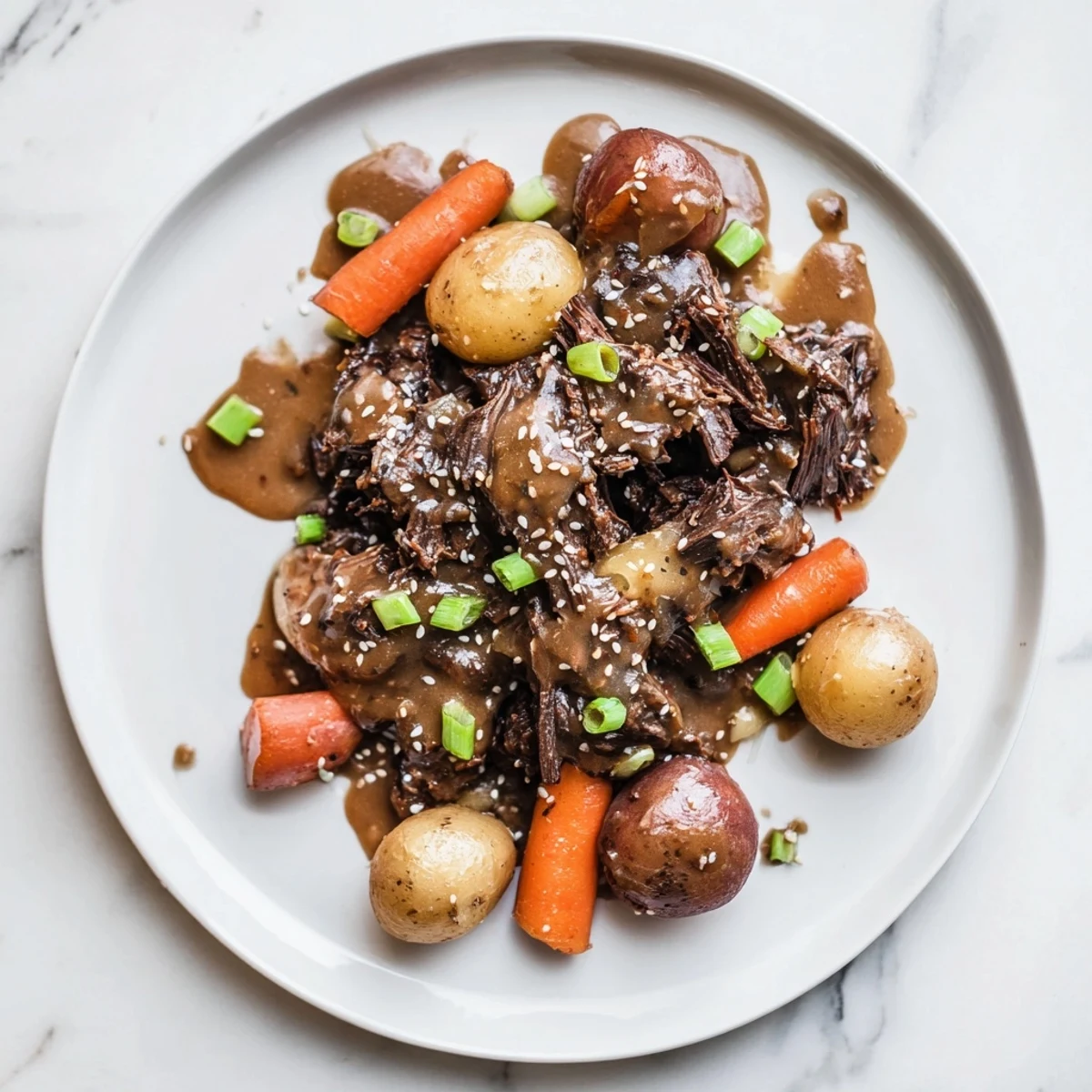
 This Korean-inspired beef chuck roast transforms over 8 hours in your slow cooker, becoming fork-tender while absorbing a savory blend of soy, garlic, ginger, and gochujang. The resulting cooking liquid becomes a thick, glossy gravy that coats every bite. Root vegetables cook alongside the beef, absorbing those same Korean flavors. Perfect for making ahead—the flavors deepen even more overnight. Serve over steamed rice with extra scallions and sesame seeds for a complete meal.
The smell of sesame oil and garlic hitting a hot pan still takes me back to my tiny first apartment kitchen. I had this beef chuck roast sitting in my fridge for days, unsure what to do with it, until I remembered watching my Korean neighbor cook through her open window one summer evening. Something about slow, low heat and building layers of flavor made sense. That first attempt was not perfect, but the house smelled incredible for hours.
I made this for my inlaws on a snowy Sunday when everyone was craving comfort food but wanted something different. My father in law, who typically sticks to pretty traditional fare, went back for thirds and asked for the gravy recipe before he even put his coat on to leave. The beef was so tender it fell apart at the mere suggestion of a fork. Watching people silently enjoy their food around a crowded table is the best kind of success.
Ingredients
- 3 pounds beef chuck roast: Chuck roast has the perfect amount of marbling to become meltingly tender after 8 hours of slow cooking
- 1/2 cup low-sodium soy sauce: Low-sodium gives you control over the salt level while still providing that deep savory base
- 1/3 cup beef broth: Adds depth without overpowering the other flavors
- 1/4 cup brown sugar: Balances the salty elements and helps create that beautiful caramelized finish
- 2 tablespoons sesame oil: This is the aromatic backbone of the whole dish and worth using the good stuff
- 6 cloves garlic, minced: Fresh garlic is non-negotiable here, the flavor needs to be bright and present
- 1 tablespoon fresh ginger, grated: Use a microplane or the smallest holes on your grater for the best texture
- 2 tablespoons gochujang: This Korean chili paste brings heat and fermentation depth, start here and add more if you like it spicy
- 1 large yellow onion, sliced: The onions practically dissolve into the gravy and become part of the sauce
- 3 medium carrots: Cut them into substantial 2-inch pieces so they do not turn to mush
- 2 cups baby potatoes, halved: These soak up all that Korean flavor while staying intact
- 2 scallions and sesame seeds: Fresh garnish cuts through the richness and adds a pop of color
Instructions
- Season the beef generously:
- Pat that chuck roast completely dry with paper towels until no moisture remains on the surface, then season all over with salt and pepper. This dry exterior helps develop flavor and lets the marinade work its way in during cooking.
- Whisk together the marinade:
- In a bowl, combine soy sauce, beef broth, brown sugar, sesame oil, garlic, ginger, rice vinegar, and gochujang until the sugar dissolves completely. The mixture should smell absolutely intoxicating, like the best Korean restaurant you have ever visited.
- Build the vegetable foundation:
- Arrange the sliced onions, carrots, and baby potatoes in an even layer at the bottom of your slow cooker. These vegetables will act as a roasting rack and slowly release their flavors into the sauce as everything cooks together.
- Position the roast and pour over the sauce:
- Lay the seasoned beef directly on top of the vegetables and pour that gorgeous Korean marinade over everything, making sure the beef is well coated. The liquid should not completely cover the roast, but it will generate plenty of cooking liquid as it breaks down.
- Let the slow cooker work its magic:
- Cover and cook on LOW for 8 hours until the beef is fork-tender and practically falls apart when you touch it. Resist the urge to lift the lid during cooking, every time you do you lose valuable heat and extend the cooking time.
- Transfer beef and vegetables to a platter:
- Carefully remove the beef and vegetables, letting any excess liquid drip back into the slow cooker. The beef might want to fall apart as you move it, which is exactly what you want after 8 hours of gentle cooking.
- Transform the cooking liquid into gravy:
- Pour all that flavorful liquid into a saucepan and bring it to a gentle simmer over medium heat. Skim off any excess fat that rises to the top, though honestly, a little richness never hurt anyone.
- Thicken the gravy to perfection:
- Whisk together cornstarch and water until smooth, then gradually whisk this slurry into the simmering liquid. Cook for 2 to 3 minutes, stirring constantly, until the gravy coats the back of a spoon and has that gorgeous velvety consistency.
- Shred and serve with abandon:
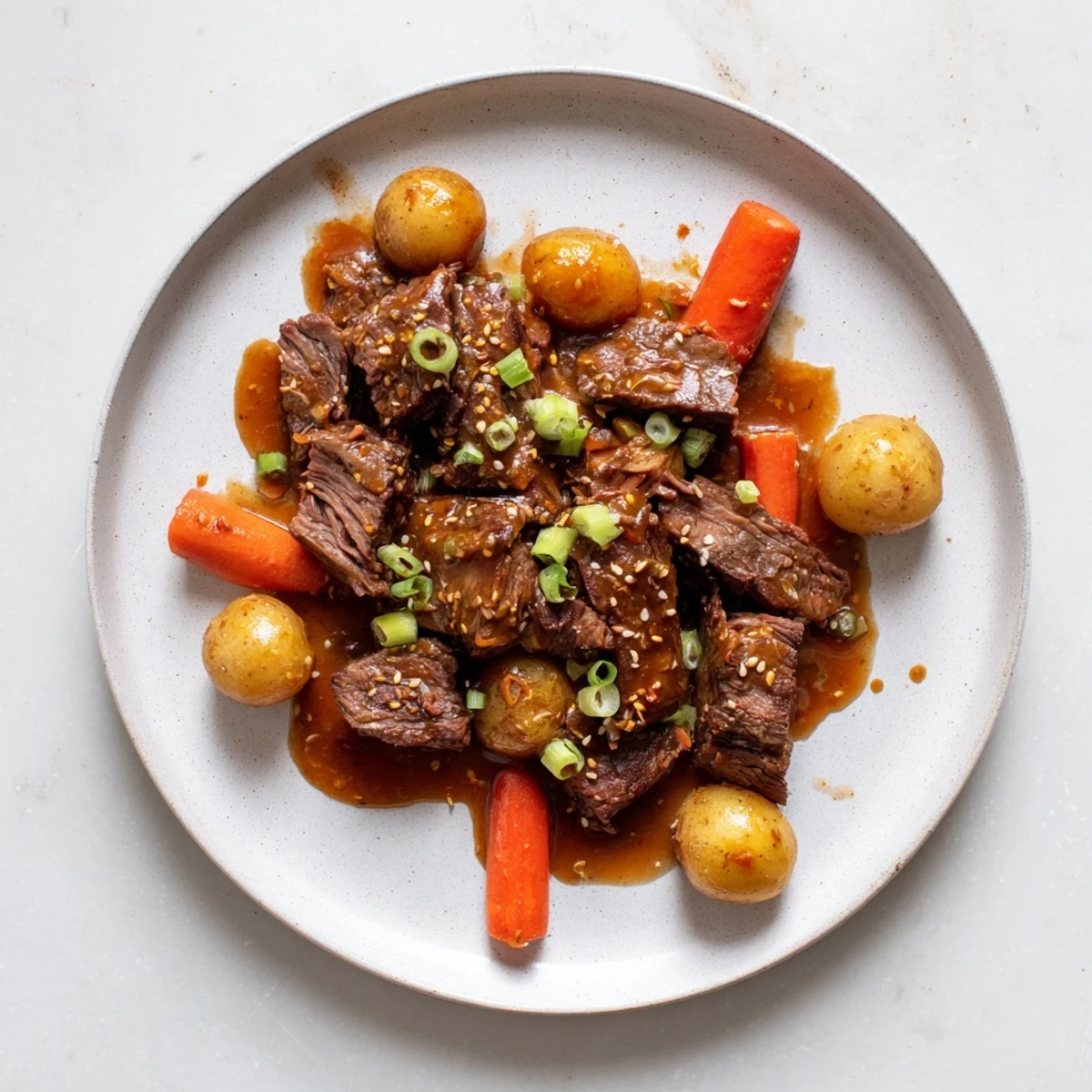
- Pull the beef apart into generous chunks and arrange on a platter with the tender vegetables. Drizzle that thick soy garlic gravy over everything, then scatter with fresh scallions and a generous shower of toasted sesame seeds.
 Pin it
 This recipe has become my answer to Sunday dinner when I want to feed people something that feels special without actually being complicated. The house fills with this incredible aroma that makes everyone wander into the kitchen asking what smells so good. There is something profoundly satisfying about putting a few ingredients in a pot and having them transform into something that brings people together around the table.
Make It Your Own
I have played around with different vegetables in the slow cooker depending on what I have on hand. Sweet potatoes work beautifully and add lovely color, while daikon radish soaks up the Korean flavors like nothing else. Sometimes I throw in some shiitake mushrooms during the last hour of cooking for an earthy element that pairs perfectly with the soy garlic gravy.
Serving Ideas That Work
While this dish is absolutely complete on its own, I love serving it over steamed white rice to catch every drop of that sauce. A simple cucumber salad dressed with rice vinegar helps cut through the richness, and kimchi on the side adds that authentic Korean touch. The leftovers make incredible tacos the next day with a quick pickle of some carrots and daikon.
Timing And Planning
The beautiful thing about this recipe is how it fits into a busy day. You can do all the prep work in the morning, start the slow cooker, and walk away. I often assemble everything the night before and keep the marinated beef in the refrigerator, then just pour it over the vegetables and turn it on before heading out. By dinner time, your house smells amazing and the hardest work is already done.
- The gravy reheats beautifully, so you can make extra and use it over rice or noodles later in the week
- If you are short on time, you can cook on HIGH for 4 to 5 hours, though LOW really does give the best texture
- Let the beef rest for about 10 minutes before shredding so it has time to reabsorb some of those juices
 Pin it
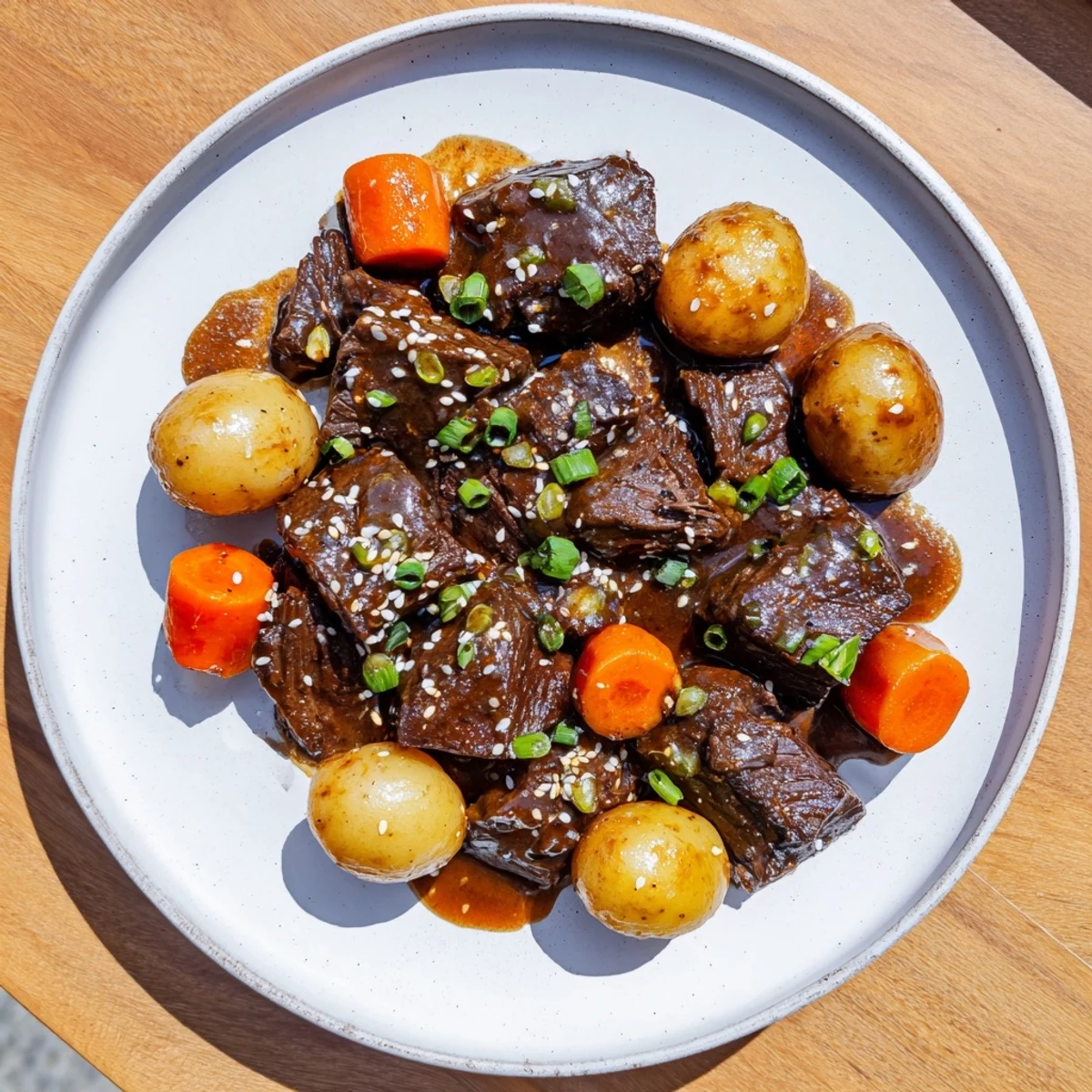
 There is something so rewarding about a meal that requires so little active effort but delivers such deep, complex flavor. This Korean beef pot roast has become one of those recipes I turn to when I want to feed people well without spending all day in the kitchen.
Recipe FAQs
- → What cut of beef works best?
-
Chuck roast is ideal for slow cooking. Its marbling breaks down during the long cooking process, creating tender, succulent meat that shreds easily.
- → Can I make this spicy?
-
Absolutely. Increase the gochujang to 3 tablespoons or add crushed red pepper flakes. The heat balances beautifully with the sweet soy gravy.
- → What sides complement this dish?
-
Steamed jasmine rice soaks up the rich gravy. Kimchi adds tang and crunch. Sautéed bok choy or roasted broccoli also work wonderfully.
- → Can I cook this faster?
-
You can cook on HIGH for 4-5 hours, but the low-and-slow method yields the most tender results. The connective tissue needs time to fully break down.
- → How should I store leftovers?
-
Keep refrigerated in an airtight container for up to 4 days. The gravy prevents the meat from drying out. Reheat gently on the stovetop with a splash of water.
- → Is this gluten-free?
-
Standard soy sauce and gochujang contain gluten. Use tamari and certified gluten-free gochujang to make this completely gluten-free.