
 Pin it
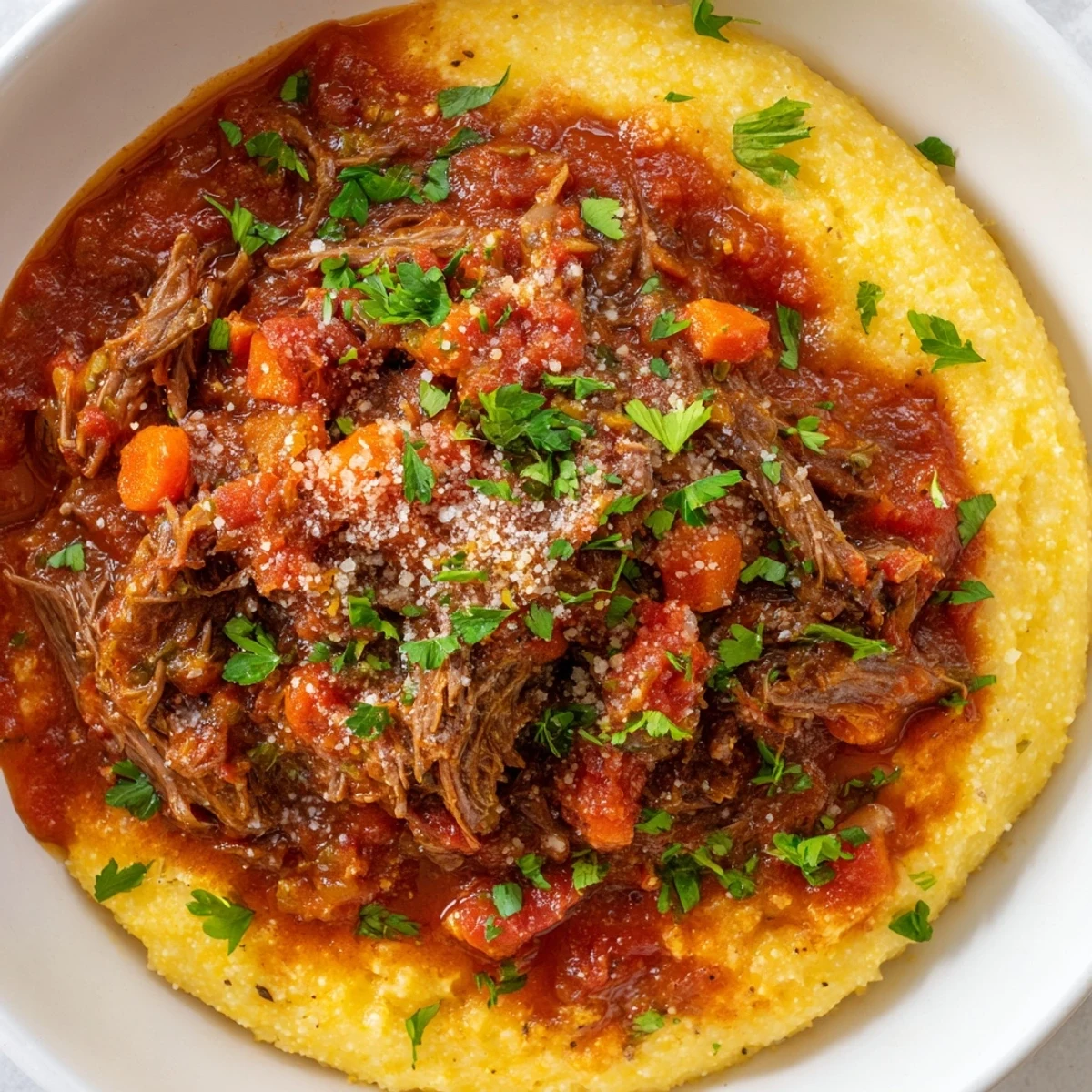
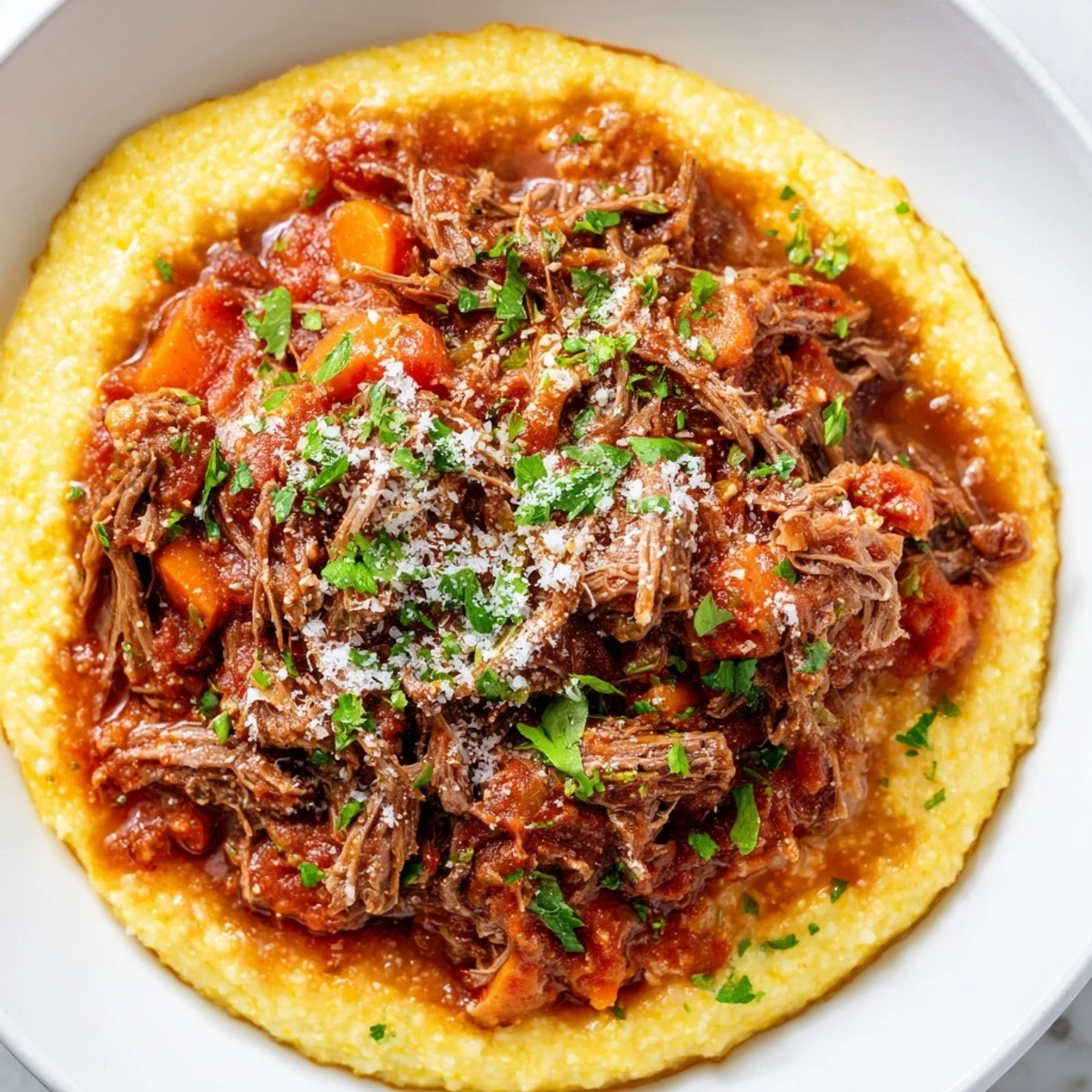
 This dish features beef chuck slow-cooked until tender in a flavorful tomato blend with herbs and red wine. The slow cooking ensures a rich and hearty sauce bursting with deep Italian flavors. Creamy polenta is prepared separately, whisked with butter and Parmesan, creating a smooth, comforting base. Served together, this combination offers a warm, satisfying meal perfect for relaxed dinners or entertaining, balancing robust meat with delicate cornmeal.
There's something about the sound of a slow cooker gently bubbling away that makes a kitchen feel like home. I discovered this beef ragu on a particularly gray autumn afternoon when I needed dinner to practically make itself, and what emerged after eight hours was pure comfort in a bowl. The tender, wine-dark beef practically melts into the sauce, and that creamy polenta underneath is the kind of thing that makes people close their eyes when they eat. It's the dish I return to when I want to feel like I've spent all day cooking without actually being chained to the stove.
I made this for a group of friends who were all tired and broke and needed something that felt like celebration without pretension. One friend kept asking if I'd been cooking all day, and I just smiled and said the slow cooker did the heavy lifting. By the end of dinner, someone asked for the recipe, and another person asked if I could make it again next month. That's when I knew this one was a keeper.
Ingredients
- Beef chuck roast (2 lbs / 900 g): This cut has enough marbling and connective tissue to become impossibly tender during the long slow cook, and it's forgiving enough that slight overcooking won't wreck it.
- Olive oil (2 tbsp): Use something you actually like the taste of, not the cheapest option, because you're searing the meat and you'll taste it.
- Onion, carrots, and celery (1 large onion, 2 carrots, 2 celery stalks): This is the holy trinity that builds the flavor foundation, and there's no shortcut here—they need to soften first.
- Garlic (3 cloves): Mince it fine so it disperses through the sauce instead of sitting in chunks.
- Crushed tomatoes (28 oz / 800 g can): The backbone of everything, and I learned the hard way that canned tastes better than jarred for this recipe.
- Tomato paste (2 tbsp): This concentrates the flavor and deepens the color, so don't skip it or the sauce looks thin and sad.
- Beef broth (1 cup / 240 ml): Use low-sodium so you control the salt level yourself.
- Dry red wine (1/2 cup / 120 ml): Any wine you'd drink works here; the alcohol cooks off and leaves behind the complexity.
- Oregano and thyme (2 tsp dried oregano, 1 tsp dried thyme): These are Italian standards, and fresh herbs wilt in slow cooking so dried actually works better.
- Bay leaves (2): Remove them before serving or someone will bite one and regret everything.
- Red pepper flakes (1/2 tsp, optional): Just a whisper if you like heat, or leave them out if your crowd prefers mild.
- Salt and pepper: Season the meat before searing because it helps develop a crust, then adjust again at the end.
- Fresh parsley (2 tbsp): Chop this right before serving so it stays bright green and alive-looking.
- Parmesan cheese (1/4 cup for serving): Get a good wedge and grate it yourself; pre-grated tastes like sawdust.
- Coarse cornmeal polenta (1 1/2 cups / 240 g): Don't use instant, which is grainy and weird—real polenta is worth the few extra minutes of stirring.
- Water or chicken broth (6 cups / 1.4 L): For the polenta base; broth adds a subtle savory note.
- Unsalted butter (2 tbsp): This finishes the polenta with richness and makes it taste luxurious.
- Parmesan for polenta (1/2 cup / 50 g): Another hit of umami that makes the polenta taste like you know what you're doing.
Instructions
- Prepare and sear the beef:
- Pat the beef chunks dry with paper towels because moisture steams instead of browning, and browning is what gives this its deep color and flavor. Season generously with salt and pepper, then sear in batches in hot olive oil until each piece is dark and crusty on all sides—this takes about four or five minutes per batch, and you'll know it's done when the meat releases easily from the pan.
- Build the flavor base:
- In the same skillet where you seared the beef, add the chopped onion, carrots, and celery, stirring until they soften and release their sweetness—you'll smell the difference after about four minutes, when the raw vegetable sharpness mellows. Add the garlic in the last minute so it doesn't burn and turn bitter.
- Combine everything in the slow cooker:
- Add the seared beef, softened vegetables, crushed tomatoes, tomato paste, broth, red wine, oregano, thyme, bay leaves, and pepper flakes to your slow cooker, then stir gently to distribute everything evenly. The sauce should partially cover the meat; trust that it'll become a rich liquid as the beef releases its moisture.
- Let it cook low and slow:
- Cover and cook on low for eight hours, which is the sweet spot where the beef becomes fork-tender and the flavors marry without the sauce reducing too much. If you're in a hurry, high heat works for four to five hours, though the meat won't be quite as tender and the sauce won't be as rich.
- Finish the ragu:
- Remove the bay leaves, then use two forks to shred the beef directly in the slow cooker—the meat should fall apart with almost no resistance. Taste and adjust the seasoning with salt and pepper; you might be surprised how much you need after eight hours of slow cooking.
- Make the polenta while the ragu finishes:
- About 30 minutes before you want to eat, bring the water or broth to a rolling boil in a large saucepan, then slowly whisk in the cornmeal while stirring constantly to prevent lumps. Reduce the heat to low and keep stirring frequently for 20 to 25 minutes until the polenta is thick, creamy, and pulls away slightly from the sides of the pan.
- Enrich the polenta:
- Stir in the butter, grated Parmesan, and a pinch of salt to taste, then let it rest for a minute so the cheese melts completely. If it seems too thick, loosen it with a splash of hot water or broth.
- Plate and serve:
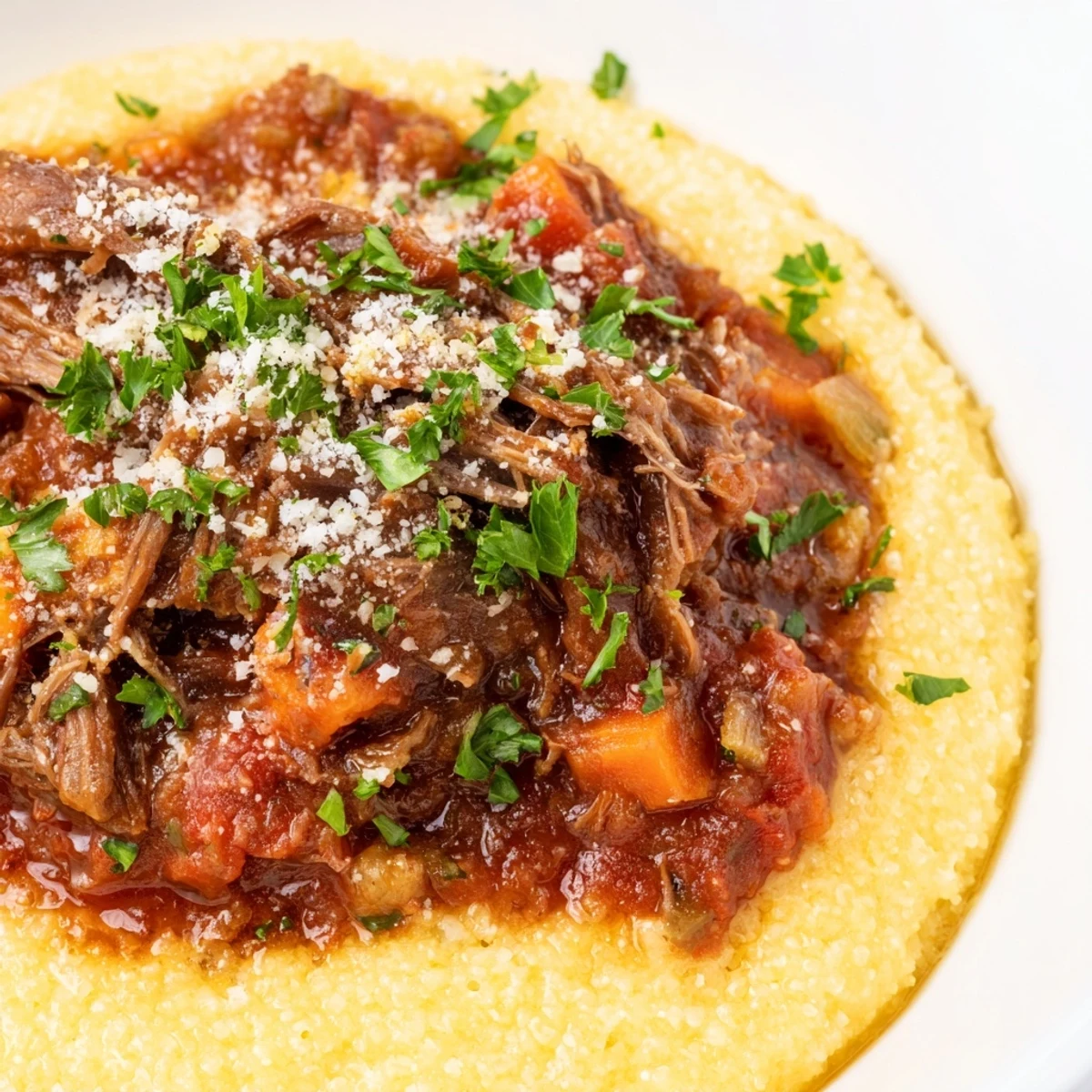
- Spoon creamy polenta into bowls, then ladle generous amounts of beef ragu over the top—the heat of the polenta will keep everything warm as it all mingles together. Finish with a handful of fresh chopped parsley and a sprinkle of extra Parmesan cheese.
 Pin it
 What I love most about this dish is how it transforms a cold evening into something warm and whole. My partner came home to that slow cooker smell once and just stood in the kitchen, eyes closed, before we'd even said hello—that's the magic this recipe creates.
Make It Ahead Without Guilt
The ragu actually improves if you make it a day or even two days before serving. Store it in an airtight container in the refrigerator, and the flavors deepen and round out as they sit together overnight. When you're ready to eat, reheat gently on the stovetop or in the slow cooker on low until warmed through, which takes about 30 minutes, then make fresh polenta whenever you're hungry.
Variations That Still Work
I've made this with lamb instead of beef on a whim, and the sauce became more fragrant and slightly gamey in the best way. Pork shoulder works too, giving you something lighter but still luxurious, though the cooking time drops to about six hours since pork doesn't have the same connective tissue as beef chuck.
Wine Pairing and Final Thoughts
Drink something robust and Italian alongside this—a Chianti, Barolo, or even a Barbera—because the wine you cook with should be good enough to enjoy afterward. The acidity cuts through the richness, and the tannins match the deep, meaty sauce perfectly.
- If you want extra decadence, stir a splash of cream into the polenta at the very end.
- Leftovers freeze beautifully for up to three months, so make a double batch and thank yourself later.
- This feeds six people generously, but the recipe scales beautifully if you're cooking for a crowd.
 Pin it
 This is the kind of recipe that earns its place in your regular rotation because it delivers comfort without fuss. Make it once and you'll understand why it belongs on the table whenever you need everyone to feel cared for.
Recipe FAQs
- → How long should the beef be cooked for optimal tenderness?
-
Beef should be cooked in the slow cooker on low for 8 hours or on high for 4-5 hours until it becomes fork-tender and easily shredded.
- → Can other types of meat be used instead of beef?
-
Yes, lamb or pork can be substituted for beef, adjusting cooking times as needed to achieve tenderness.
- → What is the best way to prepare creamy polenta?
-
Gradually whisk polenta into boiling water or broth and cook on low, stirring often for 20-25 minutes, then finish with butter and Parmesan for a smooth texture.
- → How can the sauce flavors be enhanced if made ahead?
-
Making the sauce ahead allows flavors to meld overnight, intensifying the richness and depth of the tomato and herb base.
- → Are there common allergens in this dish?
-
Yes, it contains dairy from butter and Parmesan cheese. Gluten-free broths should be used to keep it gluten-free.