
 Pin it
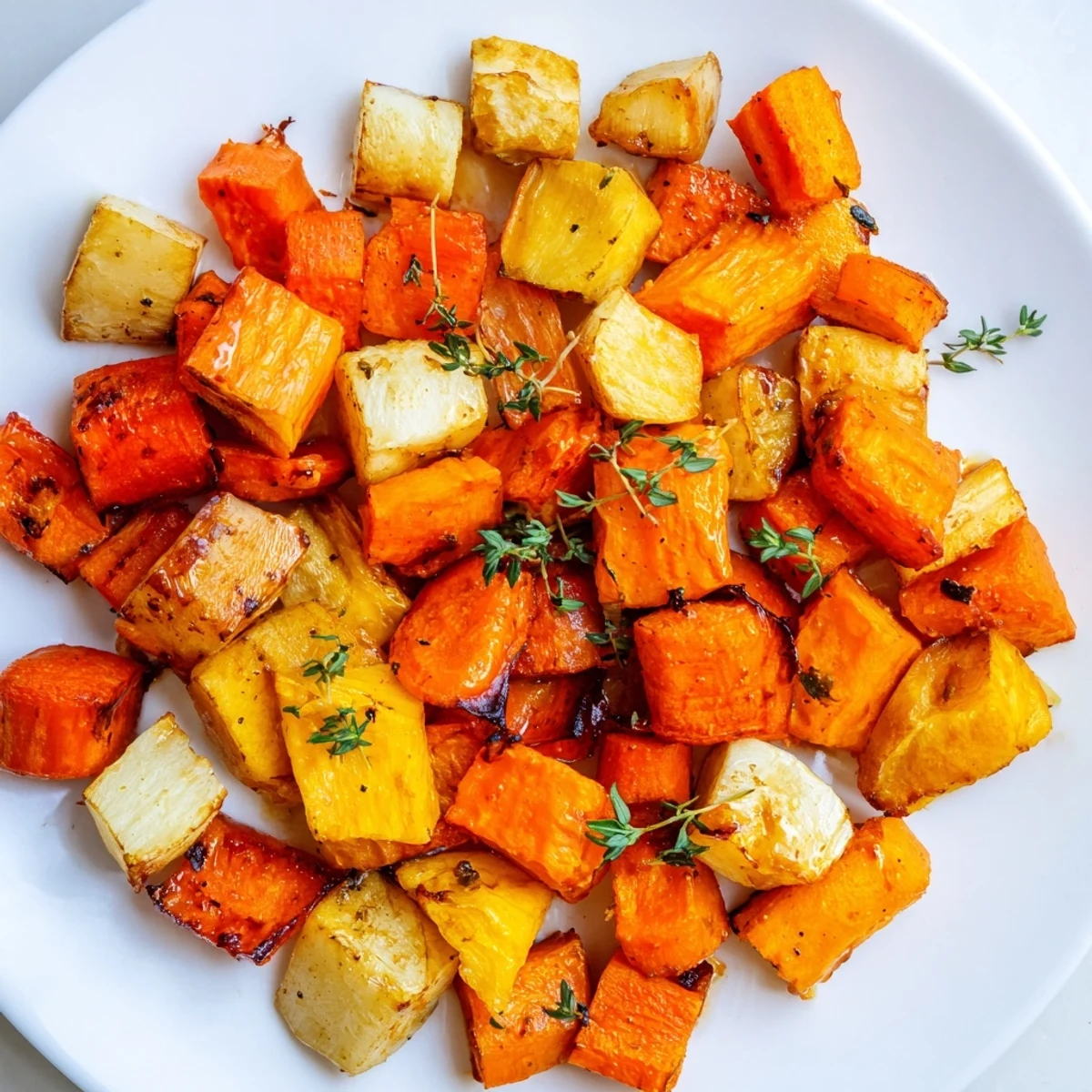
 A colorful blend of root vegetables including carrots, parsnips, sweet potato, and rutabaga are coated with olive oil, maple syrup, balsamic vinegar, and herbs. Roasted at high heat until tender and caramelized, this dish delivers a harmonious balance of sweet and savory notes. Perfect as an easy, gluten-free side, it pairs well with a variety of mains and offers comforting flavors with natural ingredients.
There's something about the smell of caramelizing root vegetables that stops me mid-afternoon. I discovered this recipe on a chilly October day when I had a handful of vegetables and wanted something warm that didn't require much fussing. The maple syrup caught my attention first, then the balsamic vinegar, and suddenly I had the kind of side dish that makes people ask for seconds before they even taste their main course.
I made this for a dinner party last winter, and my friend Sarah arrived early to find the kitchen already warm and fragrant. She watched the vegetables develop their golden edges and asked if they'd stay sweet or become savory, which made me realize that's exactly what makes this dish work—it's both, dancing between sweet maple and earthy vegetables with just enough vinegar to keep everything honest.
Ingredients
- Carrots: Two medium ones, peeled and cut into 1-inch chunks; they soften beautifully and become almost candy-like at the edges.
- Parsnips: These creamy, pale vegetables add a subtle sweetness that complements the maple without overpowering it.
- Sweet potato: One medium one, peeled and cubed; it keeps its slight firmness while absorbing the glaze perfectly.
- Rutabaga or turnip: One small one, peeled and cubed; it adds earthiness and a gentle peppery note underneath.
- Olive oil: Three tablespoons to help everything brown and catch the heat properly.
- Pure maple syrup: Two tablespoons for sweetness and that signature caramelized depth—never use the artificial stuff.
- Balsamic vinegar: One tablespoon cuts through the sweetness and adds complexity without being obvious.
- Fresh thyme leaves: One teaspoon, or half a teaspoon if dried; it grounds all the sweetness in something herbal and real.
- Salt and pepper: Half a teaspoon salt and a quarter teaspoon freshly ground black pepper to taste.
Instructions
- Heat your oven and prepare:
- Preheat to 425°F and line a baking sheet with parchment paper. This temperature creates that essential high heat that caramelizes the edges while keeping the insides tender.
- Combine your vegetables:
- Toss carrots, parsnips, sweet potato, and rutabaga together in a large bowl. The variety of sizes and textures is part of what makes this work.
- Make the glaze:
- Whisk together olive oil, maple syrup, balsamic vinegar, thyme, salt, and pepper in a small bowl until it looks like loose honey. This is where the magic starts—the syrup catching light, the vinegar sharp and dark.
- Coat everything evenly:
- Pour the mixture over the vegetables and toss with your hands until every piece has a light coating. Don't hold back; use your hands so you can feel when everything's covered.
- Spread and roast:
- Arrange vegetables in a single layer on the prepared sheet, spacing them so they have room to brown rather than steam. Roast for 35 to 40 minutes, stirring once halfway through, until the edges are golden and a fork slides through easily.
- Finish and serve:
- Let them rest for a minute if you can wait that long, then serve hot with a tiny sprinkle of extra thyme if you're feeling fancy.
 Pin it
 This became the dish I make when someone I love is coming over and I want them to feel welcomed without me disappearing into the kitchen. It's humble enough to pair with anything but distinctive enough that people remember it.
Swapping in Other Vegetables
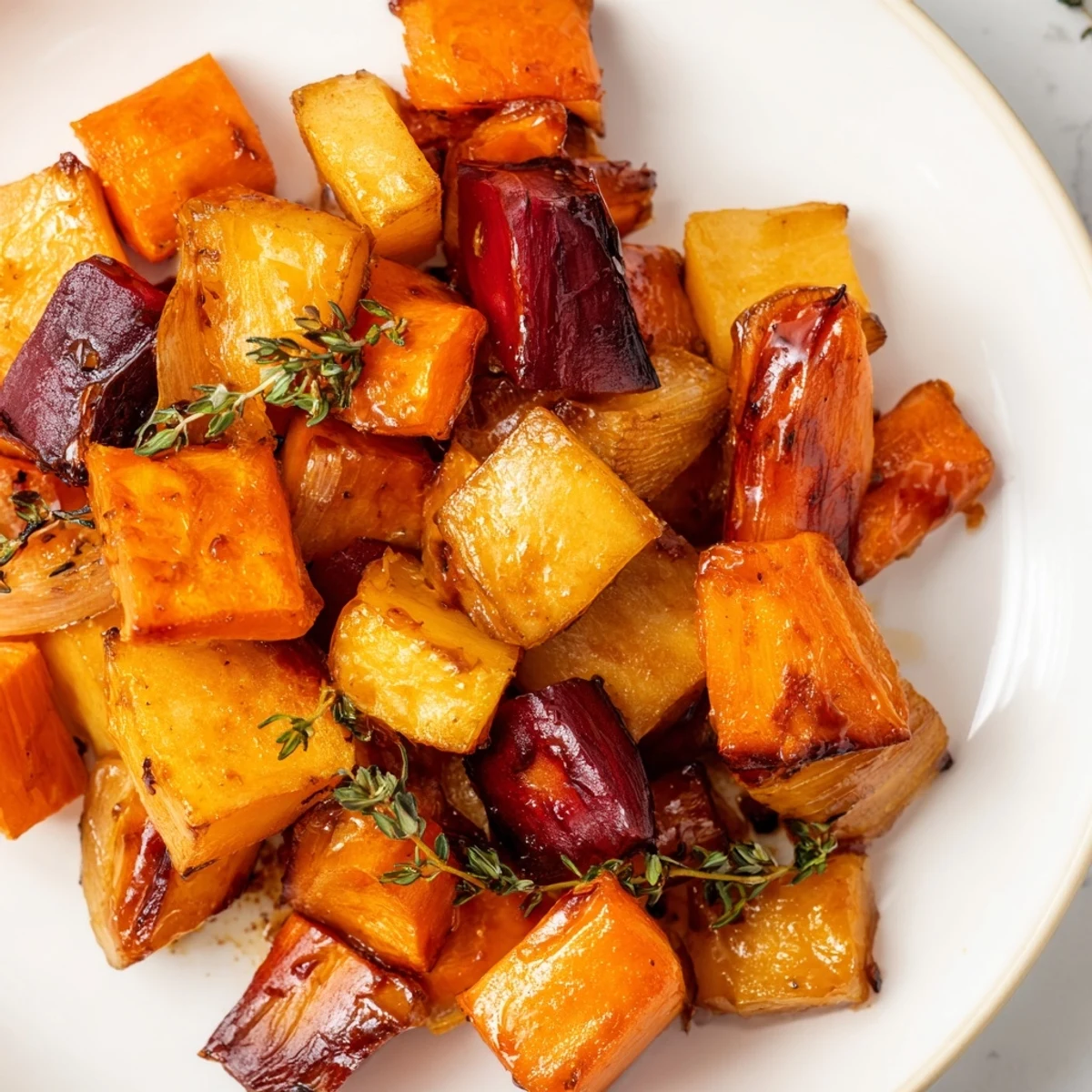
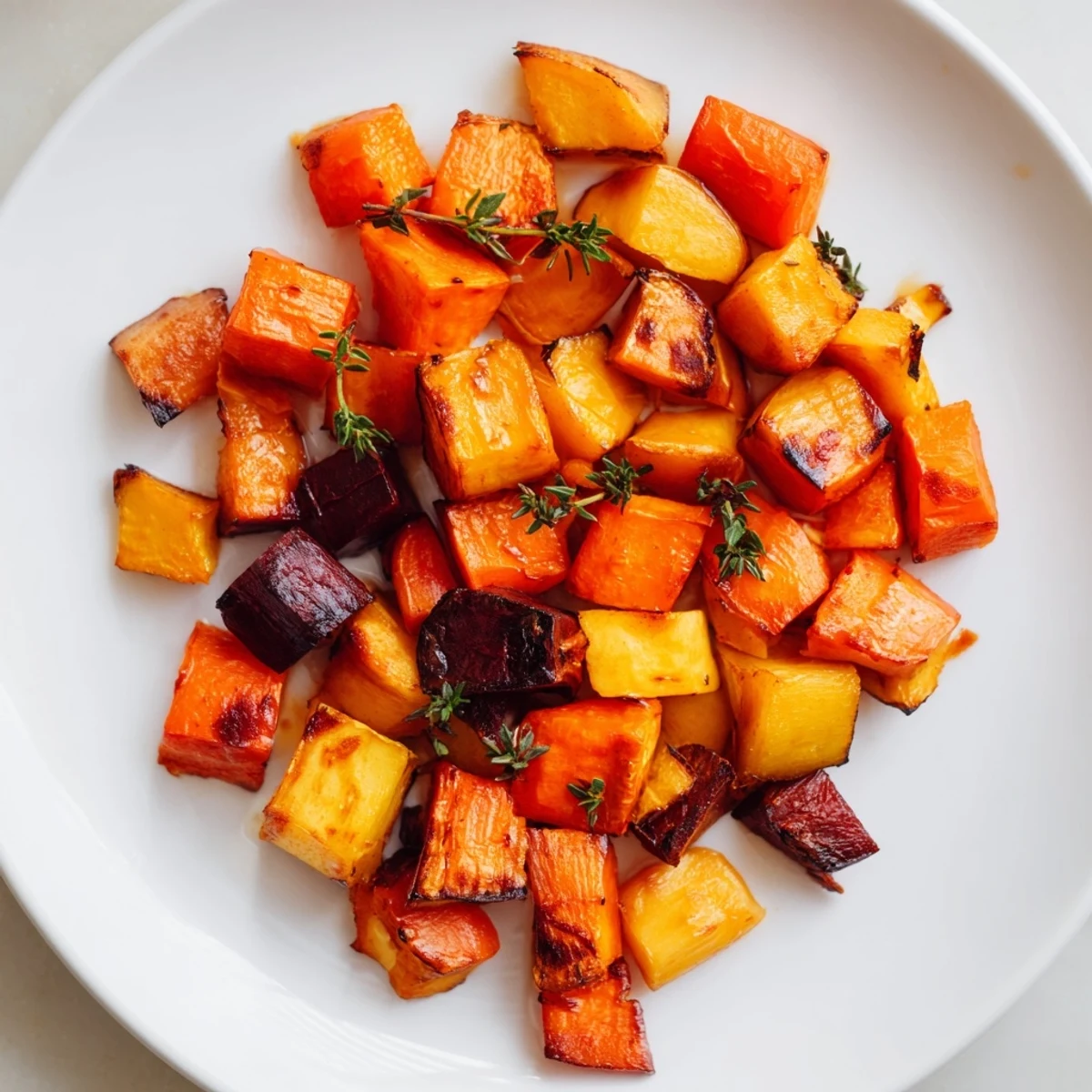
The foundation of this recipe is flexible, and that's one of its greatest gifts. I've added beets, which turn everything a deep purple and add an unexpected earthiness, or regular potatoes, which become creamy and mild. The key is cutting everything to roughly the same size so everything finishes cooking at the same moment.
Building Flavor Beyond the Basic
Once I realized the vegetables themselves were the star, I started thinking about what would make them shine even more. A handful of toasted pecans or walnuts added at the end brings crunch, while a light crumble of feta or goat cheese adds a tangy moment of contrast that stops the sweetness from becoming cloying.
The Science of Good Caramelization
Caramelization happens when vegetables hit high heat and their natural sugars brown, creating those dark edges and deep flavor. The maple syrup accelerates this process, while the balsamic vinegar and thyme keep it from becoming one-note. Think of it like a conversation where each ingredient takes a turn speaking.
- High heat and space for air circulation are what create caramelization, not steam.
- The darker the edges look, the better the flavor—don't shy away from a little browning.
- Halfway stirring ensures every piece gets equal time and heat exposure.
 Pin it
 This is the kind of recipe that quietly becomes essential, the one you make when you need something warm and the kind of delicious that doesn't announce itself but somehow makes everything around it better. It's there every autumn, and it never gets old.
Recipe FAQs
- → What vegetables are used in this dish?
-
Carrots, parsnips, sweet potato, and rutabaga (or turnip) form the base, creating a hearty and colorful mix.
- → How long should the vegetables be roasted?
-
Roast the vegetables for 35 to 40 minutes at 425°F (220°C), stirring halfway to ensure even caramelization.
- → What glaze is applied to the vegetables?
-
A blend of olive oil, pure maple syrup, balsamic vinegar, thyme, salt, and freshly ground pepper coats the vegetables for rich flavor.
- → Can other root vegetables be substituted?
-
Yes, beets or potatoes can be added or swapped to create variations tailored to taste and availability.
- → Is this dish suitable for special diets?
-
This preparation is vegetarian, gluten-free, and dairy-free, making it accessible for several dietary preferences.