
 Pin it
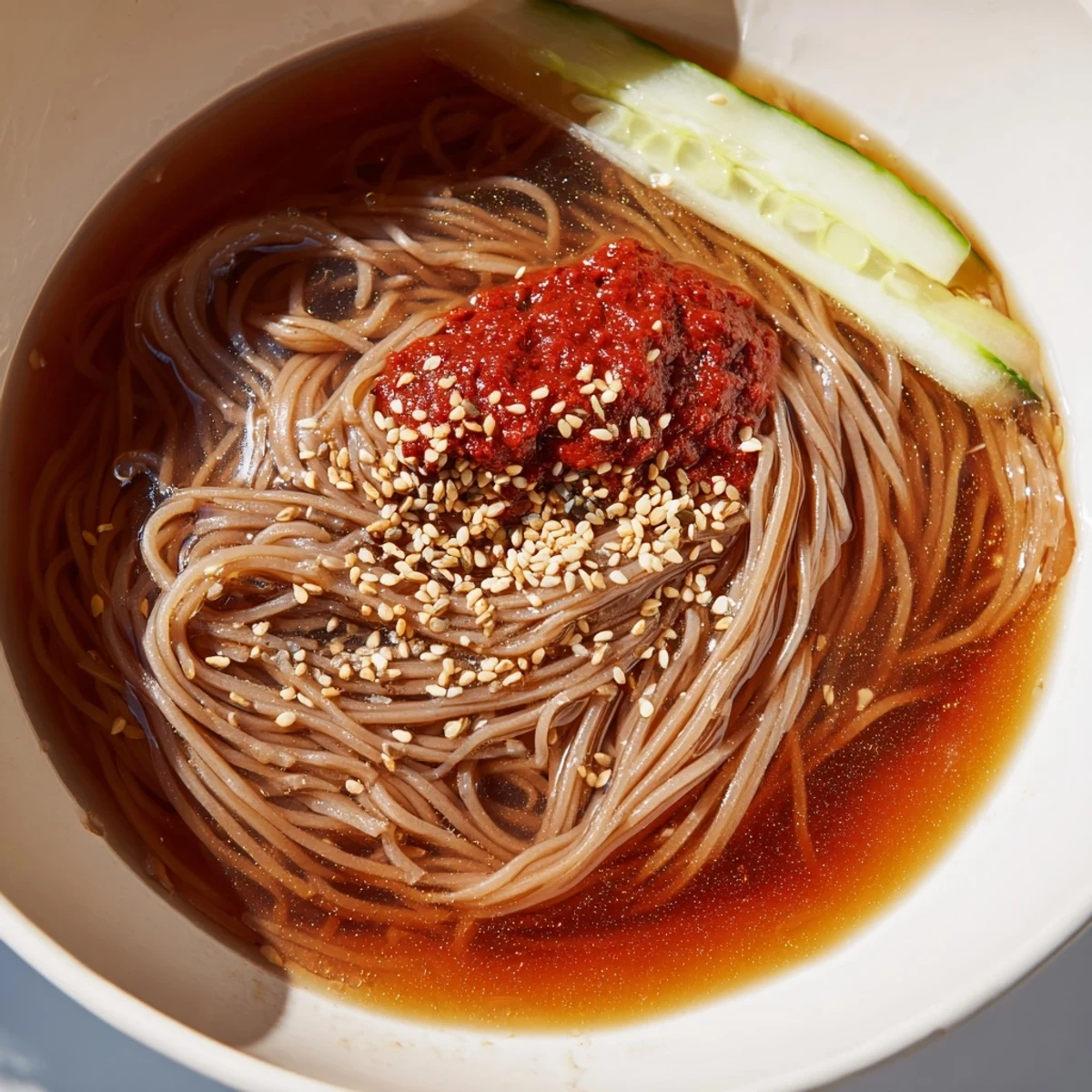
 This classic Korean dish features springy buckwheat noodles served in an ice-cold, tangy broth that's perfect for hot summer days. The refreshing combination of vinegar-based beef broth, crisp cucumber slices, sweet Asian pear, and tender brisket creates a perfectly balanced meal.
The noodles are cooked until chewy, then thoroughly chilled under cold water to stop cooking and remove excess starch. The broth gets its signature tang from rice vinegar and a touch of sweetness from sugar, while sesame oil adds depth.
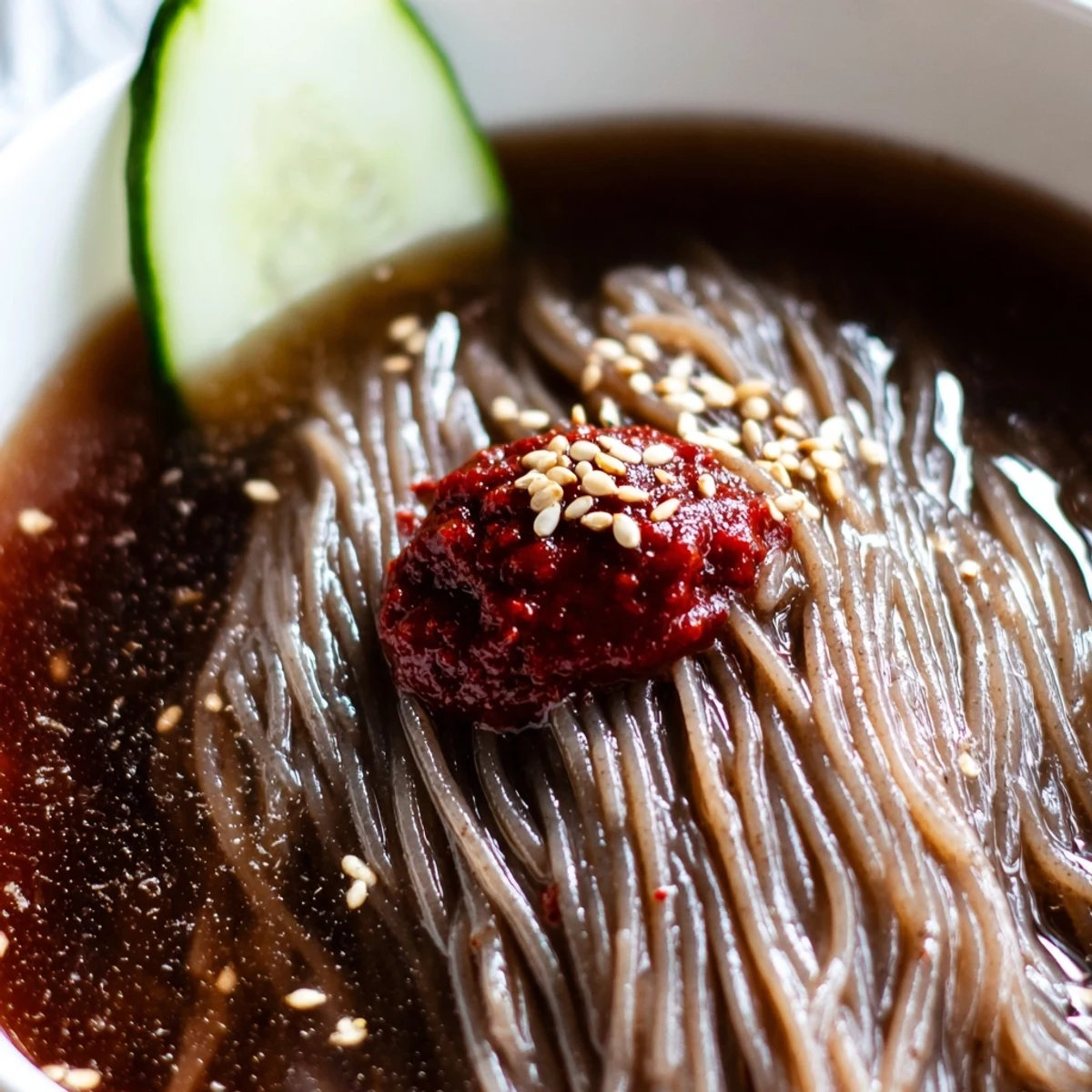
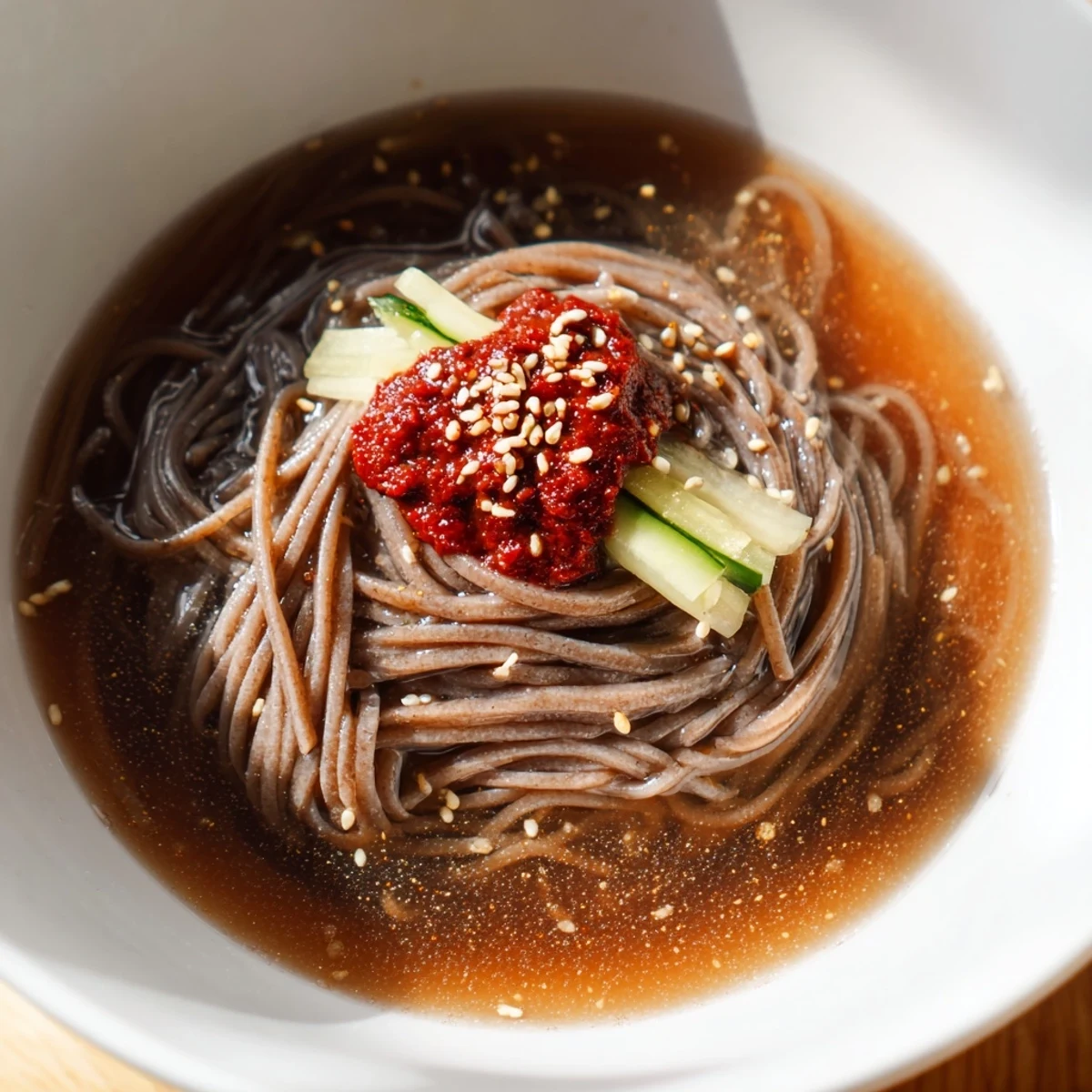
Traditional garnishes include halved hard-boiled eggs, thinly sliced beef brisket, and toasted sesame seeds. Many diners add gochujang (Korean chili paste) for extra heat. The soup is typically served with ice cubes to maintain its bracing temperature throughout the meal.
The first time I had naengmyeon was at a tiny hole-in-the-wall in Los Angeles Koreatown on a sweltering July afternoon. I remember the server warning me about the scissors, and then watching her dramatically cut through the tangled noodles right at the table. That first slurp of icy, tangy broth hit my system like culinary air conditioning. I've been chasing that refreshing sensation ever since.
Last summer, my partner came home from a bike ride looking absolutely defeated by the heat. I had just made a double batch of this broth, chilling in the fridge. Watching their face transform as they took that first spoonful—eyes widening, shoulders dropping—that's the kind of kitchen moment that sticks with you. We ate in comfortable silence, the only sound the rhythmic clinking of our metal chopsticks against the bowls.
Ingredients
- 4 cups beef broth: Homemade gives the best depth, but low-sodium works beautifully if you season thoughtfully
- 2 cups cold water: Lightens the broth so it does not feel too heavy in the summer heat
- 2 tablespoons rice vinegar: Creates that signature tangy brightness that makes cold soup so addictive
- 1 tablespoon sugar: Balances the acidity and enhances the natural sweetness of the pear garnish
- 1 tablespoon soy sauce: Adds umami depth without overpowering the delicate flavors
- 1 teaspoon sesame oil: Provides a subtle nutty aroma that rounds out the broth
- 1/2 teaspoon salt: Adjust based on your broth's saltiness—taste first, then season
- 1/2 cucumber, thinly sliced: Adds fresh crunch and a cooling element to each bowl
- 4-6 ice cubes: Non-negotiable for keeping everything perfectly chilled while eating
- 400 g naengmyeon noodles: Look for Korean buckwheat noodles specifically—soba works but the texture differs
- 1 Asian pear: Its natural sweetness and crisp texture are traditional and essential
- 2 hard-boiled eggs, halved: Creamy contrast to the tangy broth and chewy noodles
- 120 g cooked beef brisket: Thin slices add richness and protein without heaviness
- 1 tablespoon toasted sesame seeds: For that final pop of nutty flavor and visual appeal
- 1 tablespoon gochujang, optional: Add at the table if you crave heat and deeper chili complexity
- Korean yellow pickled radish (danmuji), optional: Adds a bright, tart crunch that cuts through the broth
Instructions
- Mix the chilling broth:
- Combine beef broth, cold water, rice vinegar, sugar, soy sauce, sesame oil, and salt in a large bowl. Stir until sugar and salt completely dissolve, then refrigerate until ready to serve—the colder the better.
- Prep all your toppings:
- Boil eggs for exactly 10 minutes, then cool and peel. Slice your cooked beef, cucumber, Asian pear, and optional pickled radish into thin, bite-sized pieces.
- Cook the noodles:
- Bring a large pot to rolling boil and add naengmyeon noodles, cooking for about 3-4 minutes. Drain and rinse thoroughly under cold running water until they are completely chilled and no longer starchy.
- Build your bowls:
- Divide cold noodles among four bowls and pour the chilled broth over them. Arrange cucumber, pear, beef, and egg halves on top, then add ice cubes to keep everything extra cold.
- Finish and serve:
- Sprinkle with toasted sesame seeds and add a dollop of gochujang if desired. Serve immediately while everything is icy cold.
 Pin it
 There is something almost meditative about assembling four bowls of naengmyeon, arranging the toppings like little edible mandalas. My aunt once told me that in Korea, the way you place your garnishes says something about your mood that day. I always put the eggs slightly off-center now, just to keep things interesting.
Making It Your Own
Pork or chicken broth work beautifully here if you prefer lighter options. I have even made a vegetarian version using dashi and mushroom broth, and while it is different, it still captures that refreshing spirit. The key is balancing sweet, sour, and salty no matter your base.
The Temperature Secret
Chill your serving bowls in the freezer for 20 minutes before plating. I learned this trick from a Korean friend, and it makes a remarkable difference. The broth stays icy longer, which means you can eat slowly without losing that perfect cold temperature.
Tableside Adjustments
Serve with small dishes of extra vinegar and mustard so everyone can customize their bowl. Some like it more sour, others crave an extra kick of heat. The beauty of naengmyeon is how it becomes exactly what you need in that moment.
- Have kitchen scissors ready to snip long noodles directly in the bowl
- Extra gochujang on the side satisfies spice-loving diners
- A drizzle of sesame oil right before eating adds aromatic luxury
 Pin it
 There is no better feeling than slurping down that last spoonful of icy, tangy broth and feeling completely refreshed. This soup is summer in a bowl, and I hope it brings you as much relief and joy as it has brought me.
Recipe FAQs
- → What makes naengmyeon noodles unique?
-
Naengmyeon noodles are made primarily from buckwheat and sweet potato starch, giving them a distinctive chewy, springy texture that holds up beautifully in cold broth. Unlike wheat noodles, they maintain their firmness even after extended soaking in liquid.
- → Can I substitute the beef broth?
-
Yes, you can use homemade chicken or pork broth as alternatives. For a vegetarian version, create a rich mushroom broth using shiitake and dried kelp (dashima) to achieve that deep umami flavor typically provided by beef.
- → How do I achieve the perfect broth balance?
-
The key is balancing the tangy rice vinegar with just enough sugar to create that signature sweet-sour profile. Start with the suggested amounts, then adjust to taste—adding more vinegar for brightness or sugar to mellow the acidity. The broth should taste refreshing, not overpowering.
- → Why is rinsing the noodles important?
-
Rinsing thoroughly under cold running water serves two purposes: it stops the cooking process immediately to prevent mushy noodles, and it removes excess starch that would make the broth cloudy and gummy. Keep rinsing until the water runs completely clear.
- → Can I prepare this dish in advance?
-
The broth actually benefits from being made ahead—prepare it up to 2 days in advance and keep it refrigerated. You can also slice the toppings and store them separately. However, cook and rinse the noodles just before serving, as they can become gummy if left sitting in water too long.
- → What's the best way to eat naengmyeon?
-
Traditionally, naengmyeon is eaten with scissors—use kitchen shears to cut the long noodles into manageable lengths right in the bowl. Mix everything together thoroughly before eating to distribute the broth flavors, and add extra vinegar or mustard at the table according to your preference.