
 Pin it
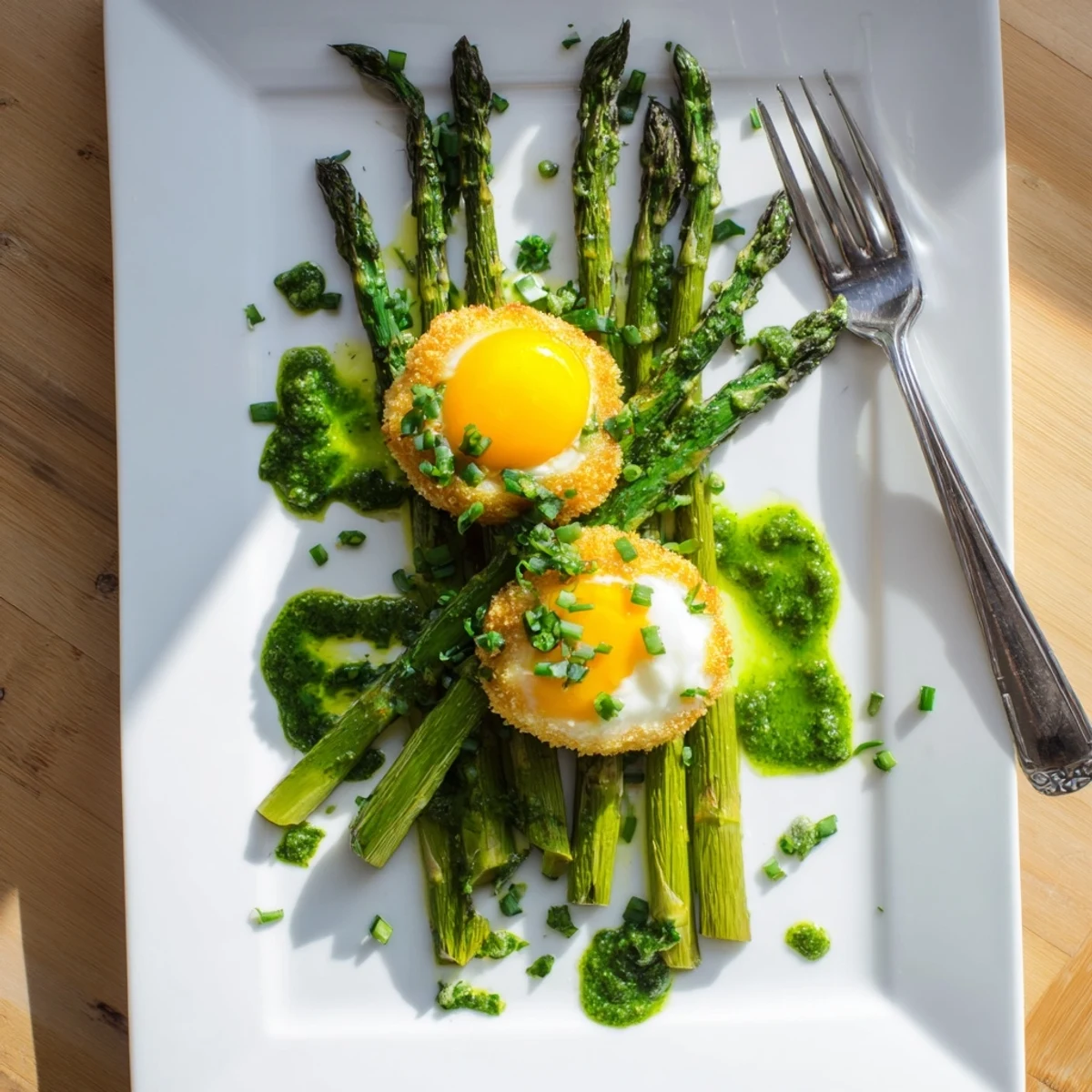
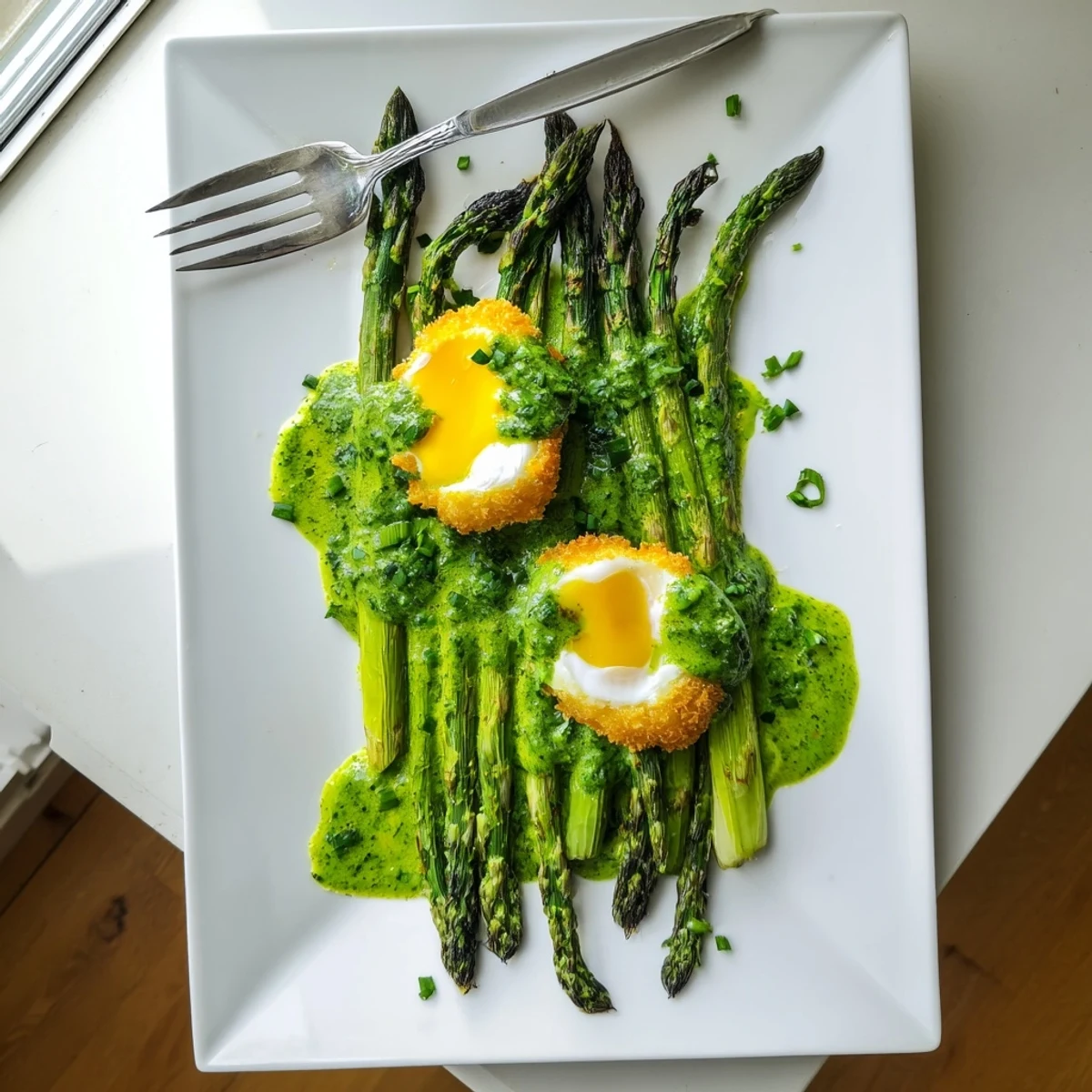
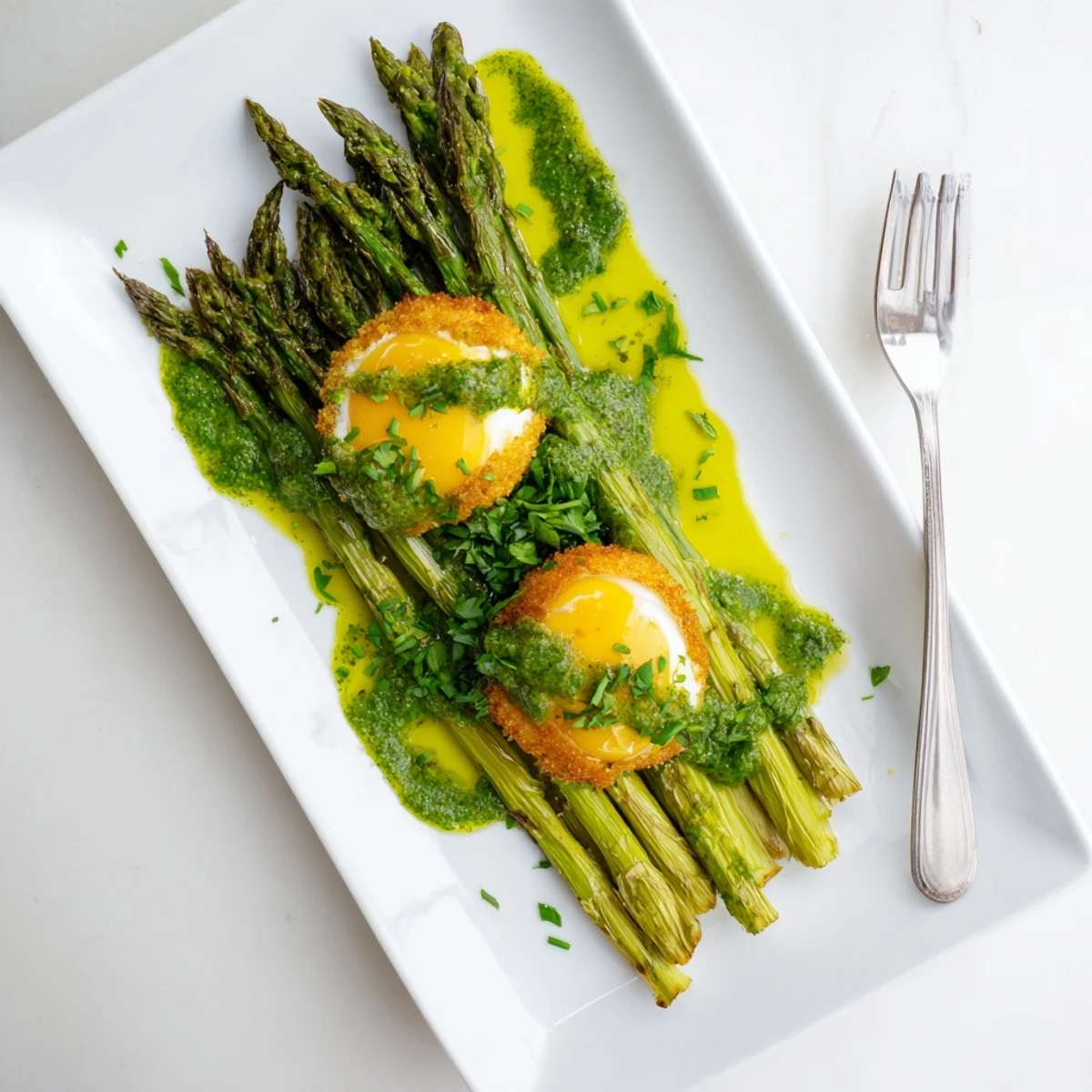
 Create an impressive appetizer featuring golden, deep-fried egg yolks with a delicate crispy coating. The rich, runny yolks pair beautifully with charred asparagus spears, while a bright herb sauce adds freshness and balances the dish perfectly.
Preparation involves carefully separating yolks, briefly chilling them for easy handling, then coating in a Parmesan breadcrumb mixture before quick frying. The asparagus gets a simple grill or sauté for tender-crisp texture and slight char. The herb sauce combines fresh parsley, chives, and tarragon with garlic, lemon, and mustard for a vibrant finish.
This refined dish delivers sophisticated flavors and contrasting textures—crispy, creamy, tender, and bright—making it perfect for dinner parties or special occasions when you want to impress.
The sound of oil popping in a small pot on a Tuesday evening is how this dish entered my life, entirely by accident, while attempting to salvage leftover egg yolks from a sponge cake gone wrong.
I served these at a dinner party where everyone stood around the kitchen island instead of moving to the table, electing to eat them hot and fast right off the paper towels, sauce dripping onto their wrists.
Ingredients
- 8 large egg yolks: Separating yolks cleanly is everything here, so crack each egg over a small bowl one at a time rather than risking the whole batch on a clumsy hand.
- 500 g green asparagus, trimmed: Snap the woody ends off by bending each stalk naturally until it breaks, which is oddly satisfying and guarantees no stringy bites.
- 1 tbsp olive oil: Just enough to coat the spears and help them char in the pan rather than steam.
- Salt and black pepper: Season the asparagus boldly because the mild yolk inside the crispy shell needs that contrast beneath it.
- 1/2 cup fine breadcrumbs: Fine crumbs cling better to the delicate yolk surface and create a more even, elegant crust than coarse panko.
- 1 tbsp grated Parmesan cheese: Optional but the savory depth it adds to the coating is worth the small extra step.
- 1/4 cup fresh parsley, finely chopped: Flat leaf parsley brings a clean grassy note that anchors the sauce without overpowering it.
- 2 tbsp fresh chives, finely chopped: Their mild onion sweetness rounds out the sharper herbs beautifully.
- 2 tbsp fresh tarragon, finely chopped: This is the secret weapon in the sauce, lending a faint anise warmth that makes people ask what is in this.
- 1 small garlic clove, minced: One clove is enough to whisper rather than shout, which is what you want in a raw herb sauce.
- 2 tbsp lemon juice: Fresh squeezed only, as the bottled stuff tastes flat and this sauce lives or dies by its brightness.
- 1 tsp Dijon mustard: Acts as an emulsifier to bind the sauce together while adding a gentle heat.
- 1/2 cup extra virgin olive oil: Use a good one here because its fruity flavor is front and center, not buried under cooking heat.
- Vegetable oil for frying: A neutral oil with a high smoke point keeps the yolk flavor clean and lets the coating crisp properly.
Instructions
- Whisk together the herb sauce first:
- Combine parsley, chives, tarragon, garlic, lemon juice, mustard, and olive oil in a bowl with a generous pinch of salt and pepper, whisking until the sauce looks glossy and unified. Let it sit at room temperature so the flavors marry while you handle everything else.
- Separate and freeze the yolks:
- Crack each egg carefully over a separate bowl and slide the intact yolk onto a plate, then transfer the plate to the freezer for exactly thirty minutes. You want them firm enough to handle without breaking but not frozen solid through the center.
- Prepare the coating:
- Stir breadcrumbs and Parmesan together in a shallow bowl, then taste a pinch to make sure the seasoning feels right before the yolks go anywhere near it.
- Coat the chilled yolks gently:
- Working quickly with a light hand, roll each firm yolk in the breadcrumb mixture, sprinkling crumbs over the top rather than pressing hard, which would crack the delicate skin.
- Fry until golden and crisp:
- Heat vegetable oil in a small deep pot to 170 degrees Celsius, then lower each coated yolk in with a slotted spoon and fry for thirty to sixty seconds until the outside is deeply golden and bubbling subsides. Drain immediately on paper towels and resist the urge to poke them.
- Cook the asparagus while yolks chill:
- Toss the trimmed spears with olive oil, salt, and pepper, then lay them in a hot grill pan or skillet and cook for five to seven minutes until tender with charred edges. They should still have a slight snap when you bite into them.
- Assemble and serve immediately:
- Arrange the asparagus on warm plates, set two crispy yolks on top of each portion, and drizzle the herb sauce generously over everything. Serve within minutes because the magic of the crisp shell is fleeting and worth chasing.
 Pin it
 A friend texted me the next morning asking for the recipe, which is the highest compliment I know, and I realized this odd little appetizer had become the dish I would be known for.
Serving and Pairing Ideas
A chilled glass of Sauvignon Blanc or a dry Riesling alongside these is genuinely transformative, as the wine picks up the herbal notes and smooths out the richness of the yolk in a way that feels deliberate.
Making It Your Own
Green beans and broccolini both work beautifully in place of asparagus when the season shifts, and I have even piled the crispy yolks over a smear of soft cheese on toasted sourdough for a more casual take.
A Lighter Approach
If deep frying feels like too much on a given night, bake the coated yolks at 220 degrees Celsius for four to five minutes and you still get a wonderful golden shell with less oil to manage.
- Watch them closely in the oven because thirty seconds too long turns a perfect yolk into a rubbery disappointment.
- A sheet of parchment underneath prevents sticking without adding extra oil.
- Let the baked yolks rest one minute before plating so the coating firms up properly.
 Pin it
 Some dishes are just worth the careful handling and split second timing, and watching someone bite through that golden shell for the first time is one of cooking great small rewards.
Recipe FAQs
- → How do I prevent egg yolks from breaking during preparation?
-
Freeze the separated yolks for 30 minutes until firm but not completely solid. This makes them much easier to handle and coat without breaking. Use a slotted spoon to gently lower them into the hot oil.
- → Can I make this dish ahead of time?
-
The herb sauce can be prepared up to 24 hours in advance and stored refrigerated. However, the crispy egg yolks are best served immediately after frying for optimal texture. You can trim the asparagus earlier in the day.
- → What temperature should the frying oil be?
-
Heat the vegetable oil to 170°C (340°F). Use a kitchen thermometer to maintain this temperature. If the oil is too hot, the coating will burn before the yolk warms through; if too cool, the coating will absorb excess oil and become soggy.
- → Can I bake the yolks instead of frying?
-
Yes, for a lighter version, place coated yolks on a baking sheet and bake at 220°C (425°F) for 4–5 minutes. The texture will be less crispy than fried but still delicious with a golden exterior.
- → What vegetables work well as substitutions for asparagus?
-
Green beans, broccolini, or roasted zucchini spears all pair wonderfully with crispy yolks. Choose vegetables that can be grilled or roasted to achieve tender-crisp texture and slight char for contrast.
- → How do I know when the yolks are perfectly fried?
-
Fry for 30–60 seconds until the coating is golden brown and crispy. The yolk should remain warm and runny inside. Cut one test yolk open to check—the center should be luxurious and creamy, not solid.