
 Pin it
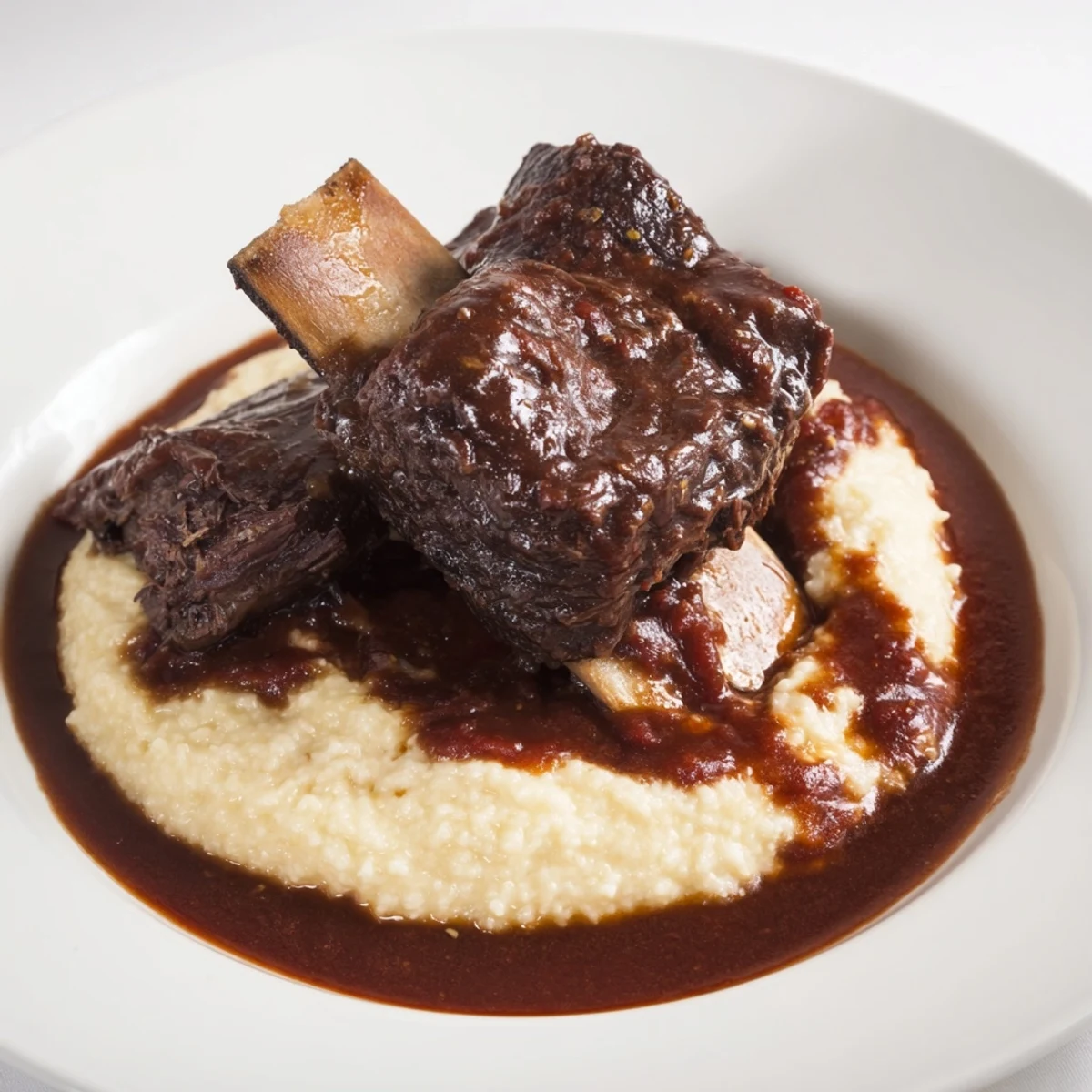
 This Italian-inspired dish features tender beef short ribs slowly braised in a rich red wine sauce until falling off the bone. Served over smooth and creamy polenta made with butter, milk, and Parmesan, it delivers comforting flavors and hearty textures. Aromatic herbs like thyme and rosemary enhance the sauce, while the polenta provides a velvety base. Ideal for a special occasion or cozy dinner, this dish takes several hours of slow cooking to develop its depth and richness, rewarding patience with an indulgent finish.
I was standing in my kitchen on a gray Sunday afternoon when I realized I had nothing planned for dinner and a package of short ribs thawing on the counter. The kind of day where you want something warm and slow, something that fills the house with the smell of wine and herbs while you pretend to be productive. That batch turned into this recipe, and now it's my go-to when I need to feel like I have my life together.
The first time I made this for friends, I panicked because the ribs were still in the oven when they arrived. But the smell had already done the work, and by the time I served it two hours late, no one cared. We ate it straight from the pot with crusty bread, and someone said it tasted like a grandmother made it, which is the highest compliment I've ever received.
Ingredients
- Bone-in beef short ribs: The bone adds flavor and the marbling makes them impossibly tender after a long braise, just make sure they're well marbled and not too lean.
- Olive oil: You need something with a high smoke point to get that deep sear on the meat, which is where half the flavor comes from.
- Salt and freshly ground black pepper: Season more than you think you should, the meat needs it and the sauce will dilute it anyway.
- Onion, carrots, and celery: The classic base that sweetens as it cooks and builds the backbone of the sauce.
- Garlic: Minced fine so it melts into the sauce and doesn't burn during the sear.
- Tomato paste: Adds umami and a slight tang, cook it for a full minute or it'll taste raw.
- Dry red wine: Use something you'd actually drink, not cooking wine, because you'll taste it in every bite.
- Beef broth: Go for low-sodium so you can control the salt, or make your own if you're feeling ambitious.
- Fresh thyme, rosemary, and bay leaves: Woody herbs that can handle the long braise without turning bitter.
- Polenta: Coarse cornmeal labeled polenta, not instant, or you'll end up with something gummy instead of creamy.
- Whole milk: Adds richness without making it heavy, and it smooths out the texture beautifully.
- Unsalted butter: Stir it in at the end for a glossy, silky finish.
- Grated Parmesan cheese: The real stuff, not the green can, it melts better and tastes like actual cheese.
Instructions
- Preheat and prep:
- Get your oven to 325°F and pat those short ribs completely dry with paper towels. Wet meat won't brown, it'll just steam, and you'll miss out on all that caramelized flavor.
- Season generously:
- Hit the ribs with more salt and pepper than feels polite. They're big pieces of meat and they need it.
- Sear the ribs:
- Heat olive oil in your Dutch oven until it shimmers, then sear each rib on all sides until they're dark brown and crusty, about 3 to 4 minutes per side. Don't rush this, the color is flavor.
- Build the base:
- Lower the heat and toss in the onion, carrots, and celery, stirring until they soften and smell sweet. Add the garlic and tomato paste, cook for another minute until the paste darkens a shade.
- Deglaze with wine:
- Pour in the red wine and scrape up all those stuck-on bits from the bottom of the pot with a wooden spoon. Let it simmer for 2 to 3 minutes to cook off the alcohol.
- Add broth and herbs:
- Pour in the beef broth and drop in the thyme, rosemary, and bay leaves. Nestle the short ribs back into the pot so they're mostly covered by liquid.
- Braise low and slow:
- Bring everything to a gentle simmer, cover with a lid, and slide it into the oven. Let it go for 2.5 to 3 hours until the meat is so tender it's almost falling apart.
- Finish the sauce:
- Pull the pot out, fish out the herb stems and bay leaves, and skim off any fat floating on top. If you want, shred the meat off the bones and stir it back into the sauce.
- Cook the polenta:
- About 30 minutes before the ribs are done, bring water to a boil in a saucepan and whisk in the polenta in a slow, steady stream. Turn the heat to low and stir frequently for 25 to 30 minutes until it's thick and creamy, no graininess left.
- Enrich the polenta:
- Stir in the milk, butter, and Parmesan, then season with salt and pepper. It should be smooth, glossy, and taste like comfort.
- Plate and serve:
- Spoon polenta into wide bowls and top with the short ribs and a generous ladle of sauce. Serve it hot and watch people's faces change.
 Pin it
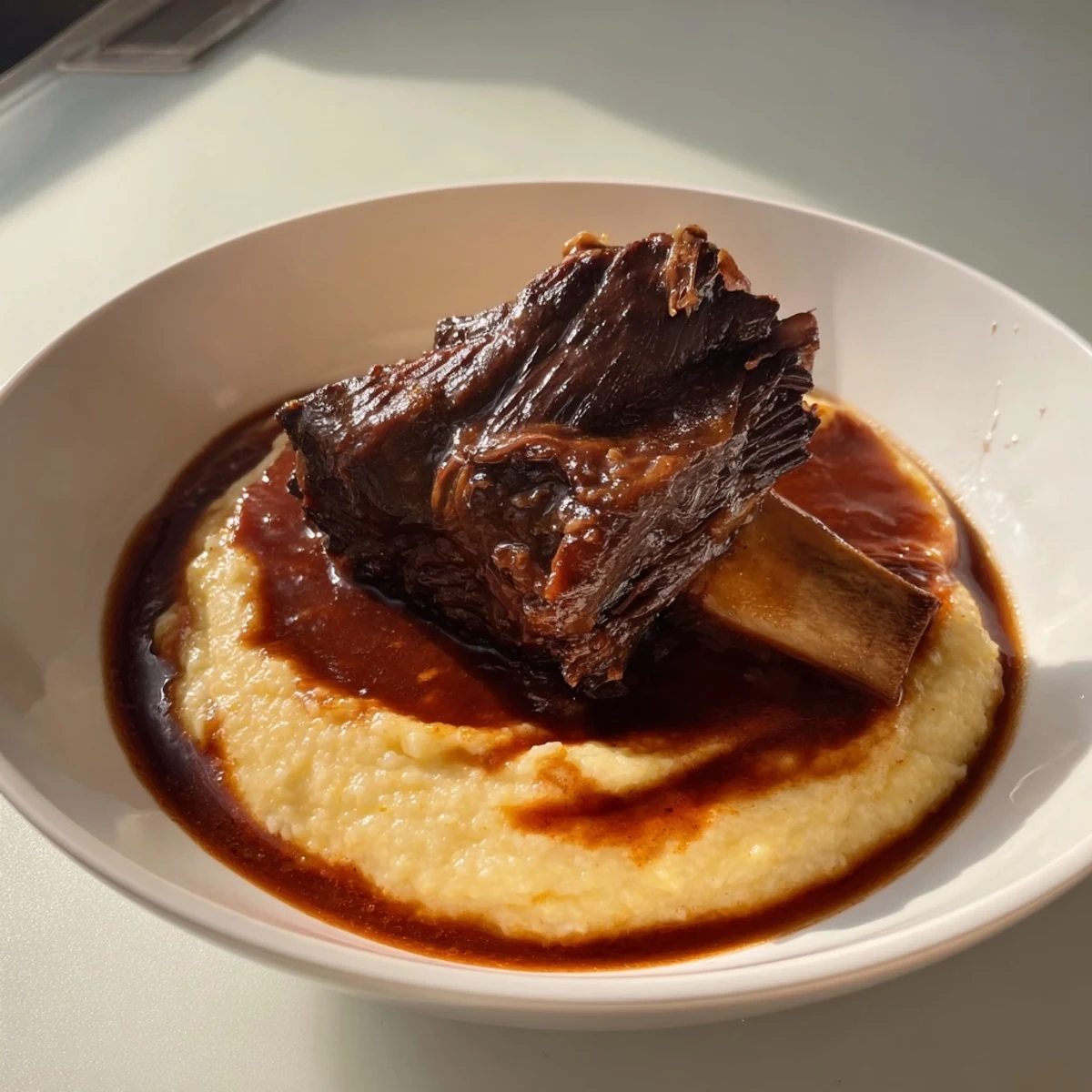
 There's a moment when you pull the pot out of the oven and lift the lid, and the steam hits your face with the smell of wine and meat and time. That's when you know it worked. My partner once said this dish tastes like patience, and I think about that every time I make it.
Pairing and Serving Suggestions
This begs for a bold red wine like Barolo or Cabernet Sauvignon, something with enough body to stand up to the richness. I've served it with crusty bread for mopping up sauce, or a simple arugula salad dressed with lemon to cut through the fat. Once I added roasted mushrooms on top and it felt like a completely different meal.
Storage and Reheating
The short ribs keep in the fridge for up to four days and somehow taste even better the next day when the flavors have married. Reheat gently on the stovetop with a splash of broth or water to loosen the sauce. The polenta will firm up when cold, but you can revive it by whisking in a little milk or cream over low heat until it's creamy again.
Variations and Substitutions
I've swapped the short ribs for lamb shanks when I wanted something a little gamier, and it worked beautifully with the same braising method. For a lighter polenta, use low-fat milk and cut back on the butter, though I'll admit it's not quite as luxurious. You can also finish the sauce with a knob of butter or a splash of balsamic vinegar for extra depth.
- Try adding a strip of orange peel to the braise for a subtle citrus note that brightens the sauce.
- If you don't have fresh herbs, dried thyme and rosemary work fine, just use half the amount.
- For a creamier polenta, substitute half the water with more milk or even a splash of heavy cream.
 Pin it
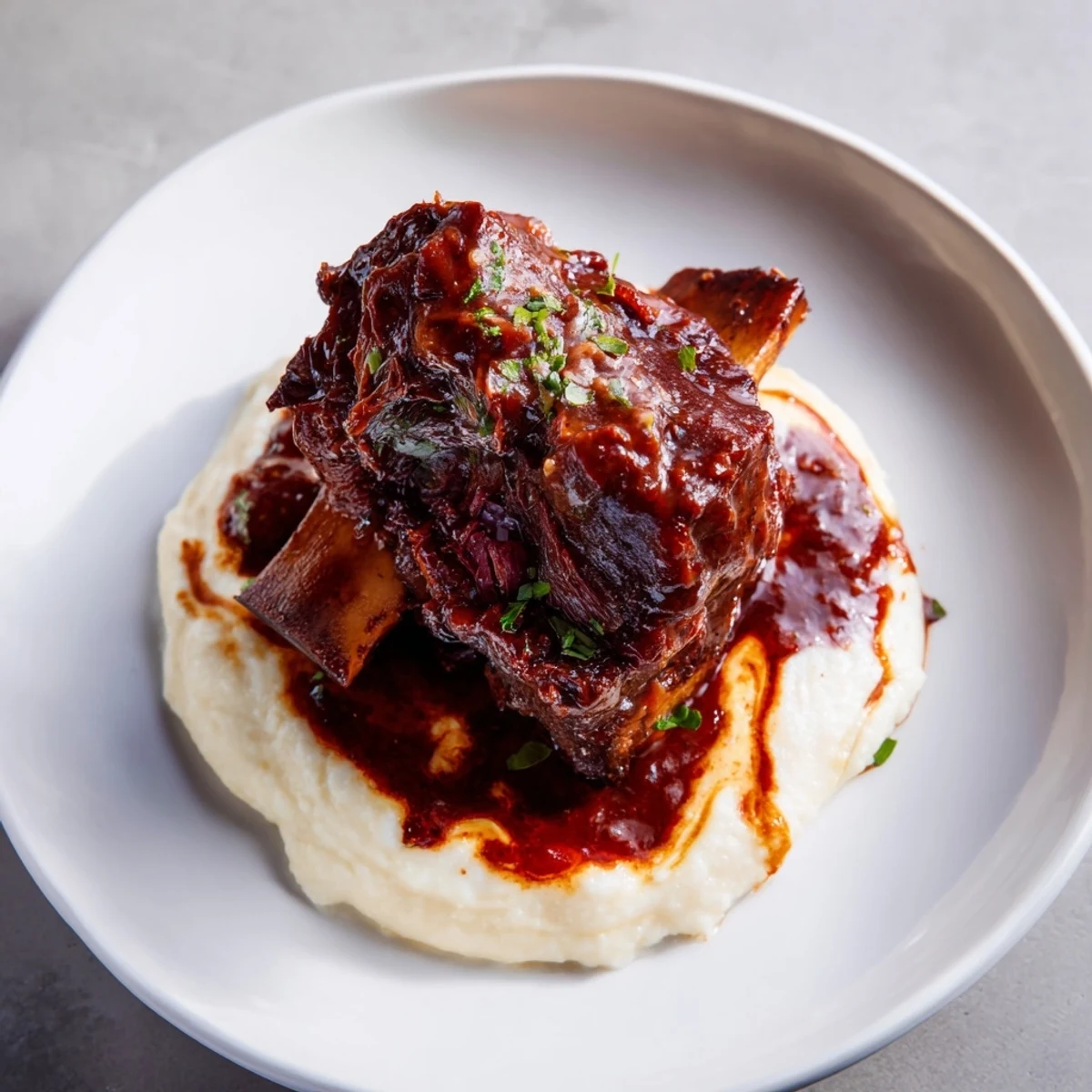
 This is the kind of meal that makes your kitchen feel like the center of the world for a few hours. Make it when you have time to let it do its thing, and you'll end up with something that tastes like you care.
Recipe FAQs
- → How do I achieve tender, fall-off-the-bone beef short ribs?
-
Slow braising the ribs at a low temperature in red wine and broth for several hours breaks down connective tissues, making the meat very tender.
- → What makes the polenta creamy?
-
Frequent stirring during slow cooking combined with milk, butter, and Parmesan cheese creates a silky, creamy texture in the polenta.
- → Can I substitute the herbs used in the braising sauce?
-
Yes, thyme and rosemary provide aromatic depth, but you can experiment with bay leaves, sage, or oregano to suit your taste.
- → What type of wine is best for braising short ribs?
-
Dry red wines like Barolo or Cabernet Sauvignon add richness and complexity to the slow-cooked sauce.
- → How can I reduce the dish's richness without sacrificing flavor?
-
Use low-fat milk and decrease the butter in the polenta; consider omitting extra butter finishes on the sauce to lighten it.