
 Pin it
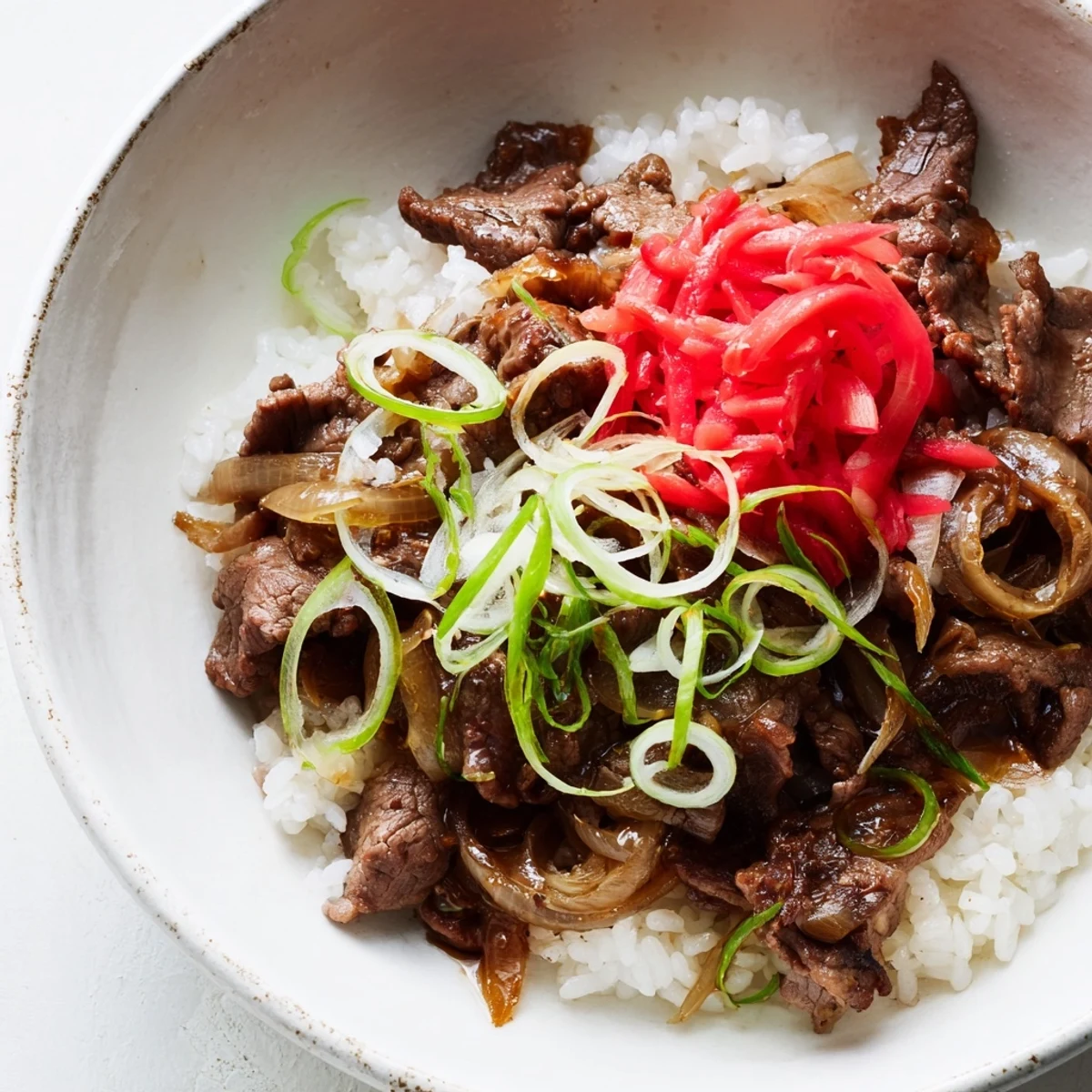
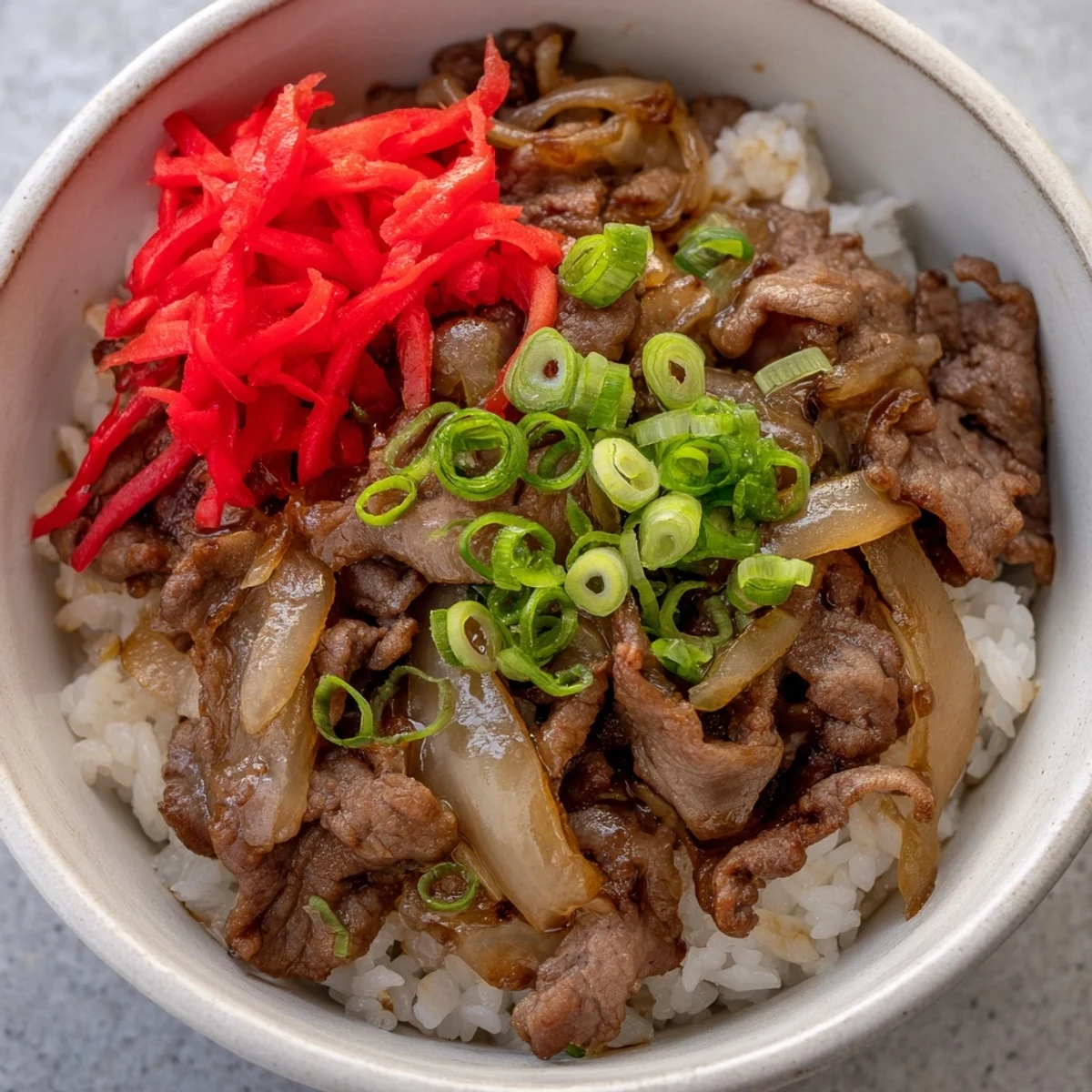
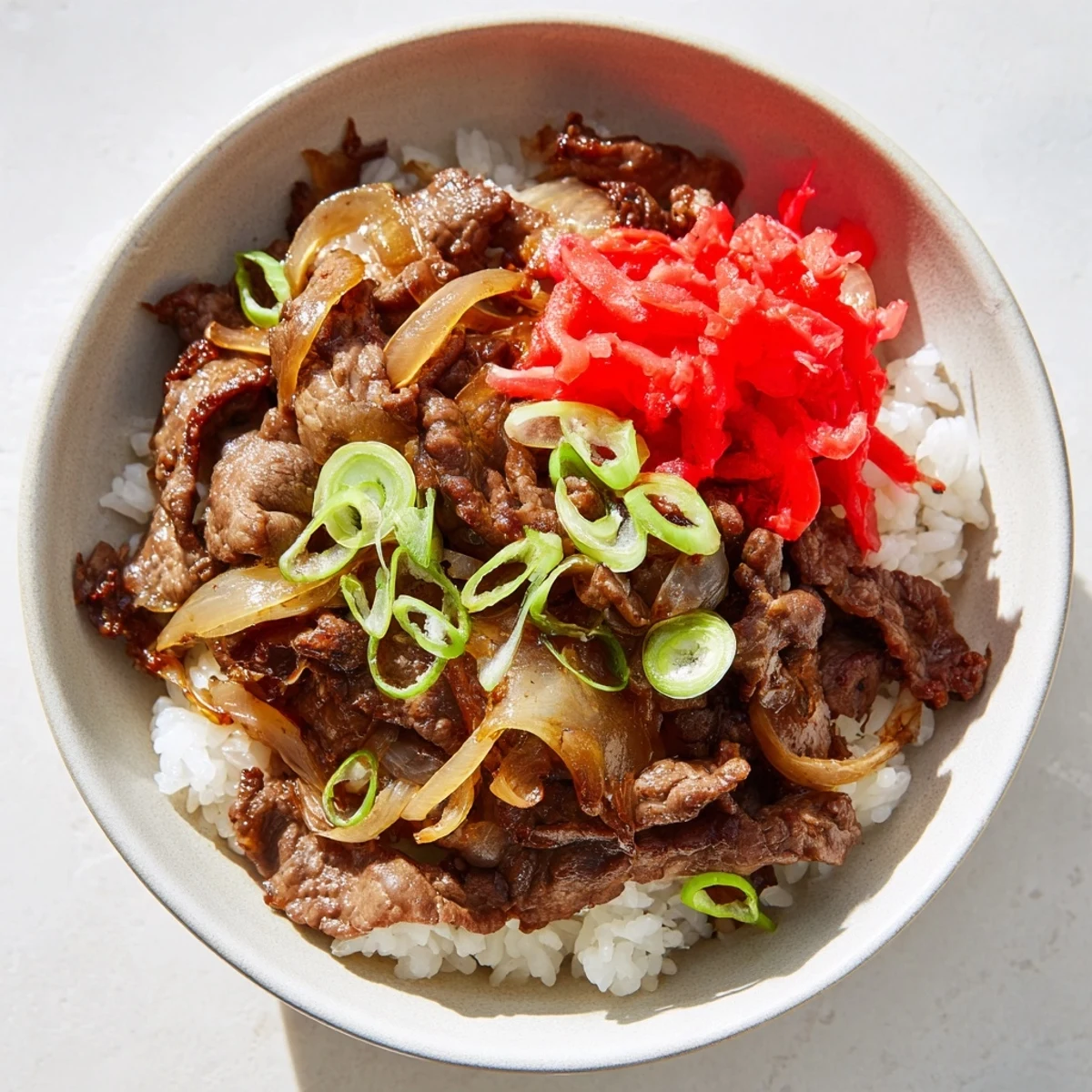
 This dish features thinly sliced beef gently simmered with onions in a savory soy-based sauce enriched with mirin and sake. Served atop fluffy steamed short-grain rice, it delivers a satisfying balance of tender meat and comforting grains. Simple to prepare, it combines aromatic ingredients like dashi stock and pickled ginger for depth, making it a quick and nourishing choice inspired by Japanese flavors.
There's something about the smell of beef sizzling with onions that makes everything feel right. I discovered this bowl years ago on a busy weeknight when I had barely thirty minutes and hungry people at the table. The combination of tender beef, that glossy caramel-colored sauce, and fluffy rice became my go-to answer whenever someone asked what was for dinner.
I made this for friends who thought I'd spent hours in the kitchen, and their surprise when I told them it took twenty minutes of actual cooking was worth every bit of effort. They asked for the recipe that same night, and now I've made it maybe fifty times over.
Ingredients
- Beef sirloin or ribeye, thinly sliced: The thinner the slices, the faster they cook and the more the sauce coats them—ask your butcher to slice it for you if they'll do it.
- Short-grain white rice: This is the rice that sticks together just enough to make the bowl feel cohesive, not fluffy and separate.
- Dashi stock: This is the secret ingredient that makes the sauce taste authentic, but beef broth works when you're in a pinch.
- Soy sauce, mirin, sake, and sugar: Together these build a sauce that's salty, slightly sweet, and deeply savory all at once.
- Onion, thinly sliced: The onion becomes soft and almost caramelized, absorbing the sauce and losing its sharp edge.
- Spring onions and pickled ginger: These add a bright note at the end and cut through the richness like a small gift on top.
- Vegetable oil: You need just enough to keep the onions from sticking while they soften.
Instructions
- Start your rice first:
- Rinse the rice under cold water until the water runs clear, then add it to your rice cooker or saucepan with the water. This takes two minutes but makes a difference in how the rice tastes.
- Build the flavor base:
- Heat the oil and sauté the onion until it softens and turns a bit translucent. Mix your dashi, soy sauce, mirin, sake, and sugar in a bowl, then pour it into the pan and let it come to a gentle simmer.
- Cook the beef gently:
- Spread the beef slices evenly in the simmering sauce and cook for five to seven minutes until they're just cooked through. The beef should be tender, not tough, so don't let it sit too long.
- Bring it all together:
- Fluff your rice, divide it among bowls, and spoon the beef and onions with their sauce over the top. Garnish with spring onions and pickled ginger if you have it.
 Pin it
 I remember my daughter asking if restaurant food was really that much better than what I made at home, then she tried this bowl and understood. She's asked me to make it for her class potluck, her birthday dinner, and probably a dozen meals in between.
The Magic of the Sauce
The sauce is where this bowl gets its personality. Soy sauce brings the salt and depth, mirin adds a gentle sweetness that balances it, sake brings a subtle fragrance, and dashi ties it all together with umami that makes your taste buds sit up and pay attention. When the beef and onions simmer in this mixture, they absorb every drop of flavor and the sauce reduces just enough to cling to the rice.
Rice Matters More Than You Think
Short-grain rice is essential here because it's slightly sticky and holds onto the sauce instead of letting it run off the way long-grain rice would. The first time I used long-grain rice thinking it wouldn't matter much, the whole bowl felt dry and sad. After switching back to short-grain, everything changed. It's one of those small choices that feels invisible but completely transforms the meal.
Making It Your Own
This bowl is forgiving and welcomes your variations once you understand the basics. Some people add a soft-poached egg on top, letting the yolk run through the rice. Others sprinkle it with shichimi togarashi for heat and complexity. You can even add a handful of quick-cooked vegetables if you want more color on the plate.
- An onsen egg (gently cooked in hot water) sits perfectly on top and feels luxurious.
- A sprinkle of seven spice adds warmth without overpowering the beef and sauce.
- Nori sheets torn on top add a subtle ocean flavor if that's something you enjoy.
 Pin it
 This bowl has become my answer to so many questions: What's for dinner? What should I bring to share? What do I make when I'm tired but don't want to compromise on flavor? It's the kind of meal that reminds you that good food doesn't have to be complicated.
Recipe FAQs
- → What cut of beef works best for this dish?
-
Thinly sliced sirloin or ribeye is ideal for quick cooking and tenderness.
- → Can dashi stock be substituted?
-
Yes, beef or vegetable broth can be used as alternatives, adjusting flavors as needed.
- → How do I avoid overcooking the beef?
-
Simmer the beef just until cooked through, about 5–7 minutes, to keep it tender.
- → What rice type is recommended?
-
Short-grain white rice is preferred for its sticky texture, complementing the dish well.
- → Are there flavor enhancements suggested?
-
Add a soft-poached egg or a sprinkle of shichimi togarashi for extra richness and heat.